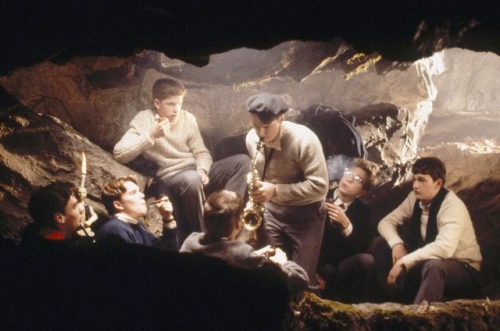
There has been a lot of buzz lately about the commencement speech delivered below, and its message to young people that they are not “special.”
I love the speech. David McCullough, Jr. did an excellent job framing his argument, using humor, and being direct in his opinions. I guarantee the speech caused most people in the audience to think differently about something, which is the point of good speeches. I also liked his attack on cliches. He closes the speech with powerful - albeit not new - advice on how to succeed: don’t wait for success to come to you, and do things for selfless reasons. Good stuff.
But I am bothered - not by the speech itself - but by many of the reactions in support of the speech. All across the spectrum - from national news outlets to my own social media connections - the cheering of his message has taken on a life of its own. It seems that people couldn’t wait to say: “yeah kids - that’s how it is!”
It is conventional wisdom now to believe that kids are too pampered, and that parents bolster their self-esteem too much. Of course these things are true in some cases, but is this really a big issue? College applications are more competitive than ever. Job applications are more competitive than ever. Do we really think these kids aren't capable of seeing that real life doesn't have 7th place ribbons like their soccer league did?
We critics of this generation should take it down a notch. It’s true that many parents overdo it with praise and are too quick to rescue their son or daughter from mistakes. But, there are bigger problems in our world, right? What about the parents who overdo it with criticism? What about those who are absent? Shouldn’t we be more concerned about them?
These kids are starting their lives. A knight who goes to battle in armor will likely get hurt. A knight who goes to battle without armor will likely get killed. Parents spend 18 years trying to strengthen the armor, and too many of us take joy in the chance to strip it off. We're at war with youthful exuberance. Just so we can tell these kids how it really is. Or maybe, feel better about ourselves?
I like young people to be brash, full of confidence, and ready to just go for it. To feel bulletproof. That’s their thing. The contribution that 18-25 year-olds make to the world is their enthusiasm. Their optimism and self-efficacy are their gifts to the rest of us. They bring balance to our universe.
Do you remember your graduation and the days after? I remember mine, and the feelings I had which can be best summarized as “alright world, let’s do this!”
I used to hate overconfidence in young people. I’d mumble “they’ll learn” under my breath. Now, more often than not, it makes me smile. Why shouldn’t they be overconfident? Maybe I just want some of it back. Confidence and brashness is always beaten back by reality. That’s life. That’s the journey we share.
But why do we want young people to reach the end of the journey before they even begin?
The most relevant messages in our world are the ones that hit home. As I watched Mr. McCullough’s speech, my initial reaction was to join in his criticism. But then, I realized that he was speaking to me too. In many ways, I am no different than the kids sitting out on that field. Becoming truly selfless runs parallel to finding the answers to life itself. It’s a destination we all will likely never reach, but should try anyhow.
That’s why I love older people. They are closer to that destination, and have learned so much along the way. That’s why they stand at a podium and give commencement speeches trying to impart their wisdom to the young and innocent.
And the young may listen, but not truly hear it. What’s really wrong with that? Is it more unfortunate that they don’t have cynicism about their specialness, or that we adults have totally succumb to it? Maybe we should listen to them.
I posed a question to a group of colleagues I respect immensely, and who work in the youth development field: if the goal is to prepare young people for the tough life ahead, is a greater service to them to tell them they are not special, or to tell them they are? My wise colleagues correctly pointed out that there is a middle ground.
I think we should all be cautious, however. When us adults look a young, energetic, seize-the-day kid in the eyes and tell them that are just average/ordinary/not special, are we doing it for their benefit, or for ours?
Thoughts to challenge, celebrate, and elevate the college fraternity and sorority.
An Acronymonious Conversation
Hello.
Lovely day isn’t it?
Quite lovely.
What brings you to town?
I’m attending a conference.
Oh yeah? Which one.
What's FEA?
No problem, we use acronyms a lot in our organization too.
Interesting.
I bet it's really weird for others to hear these. These things are just better known for their acronyms.
[silence]
Oh yeah? Which one.
FEA.
What's FEA?
Oh sorry - I speak in acronyms sometimes. FEA is Fraternity Executives Association.
No problem, we use acronyms a lot in our organization too.
Higher ed is full of them. We have NIC, AFA, NPHC, AFLV, NGLA, SEIFC, SEPC, NASPA, ACPA, and UIFI. Just to name a few.
Interesting.
I bet it's really weird for others to hear these. These things are just better known for their acronyms.
[silence]
How about you? What are you in town for?
I am also attending a meeting.
Oh yeah, which one?
It’s the annual meeting for the Association of Blatantly Correct and Dentally Energized
Farmers Growing Horrendously Important and Judiciously Khaki Legumes Mostly for
Nourishment, Ointment Production, and Quasi-scientific Reindeer Science That Undoes
Viral Warts on Xenolithic Yellow Zymoids.
[blank stare]
It’s better known by its acronym: ABCDEFGHIJKLMNOPQRSTUVWXYZ.
[silence]
Darn it. You win.
Have a nice day.
So, How Did You Do?
On many days, I think getting Jack Bauer to give up what he knows would be easier than getting my 6-year old to share about his day
at school. No matter how I ask the
question, the answer is usually the same:
How was school today?
Good.
What happened at school today? Good.
What did you have for lunch today? Good.
I wonder, though, if fraternity and sorority members get a
case of the “goods” when they think about the year that has passed.
How is the fraternity/sorority doing? Good.
How would you describe the year overall? Pretty good.
As the academic year winds down, I ask that you put a little
more thought into evaluating the year that has come and gone. It was a year in your life, and a year if
your chapter’s history. It deserves more
than just “good.”
Before you launch forward on the development of a robust
vision for the next year, spend some time thinking about, learning from, and
evaluating this year. By the way, it's about more than checking off a list of chapter goals. While that should matter, you should be willing to play with deeper questions. Winning the all-sports trophy, for example, means little to whether or not your organization is truly advancing.
In order to avoid the “goods” and “pretty goods” I’ve
thought up some analogies that might help you with your evaluation.
The Ice Analogy
Every organization and business sits upon a perpetual sheet
of ice. No matter how strong the
organization may be, there is always a chance it will crash through to the
water below. The difference between one
organization and another is how thick their sheet of ice is. That will determine if it can withstand a few
cracks, or if one more step means it's over.
So think about this past year. Did your sheet of ice thicken, or did it get
thinner? How sturdy is your sheet of
ice? Are you able to take big confident
steps, and perhaps even drive your truck out there for a little ice fishing
(sorry, I have a tendency to take analogies too far).
Or, are you walking gingerly?
A few things can directly impact the thickness of your ice:
- Finances: How did you finish the year financially? Were all the bills paid? Is your budget healthy?
- Incidents: Did anything happen this year that put a target on your back? Are you on the university’s short list?
- Leadership: How is your executive board doing? Is there a lot of trust in them? How deep is your bench for this fall’s election?
The Ronald Reagan Technique
Ronald Reagan famously led his run for president in 1980
with the question: “are you better off than you were four years ago?” He was referring to the years governed by the incumbent, Jimmy
Carter. This question and phrase now
pops up in every presidential election.
It’s an effective way for the challenger to force voters to evaluate the work of
the incumbent.
This technique, for our purposes, is all about evaluating
the year through the members’ eyes. You
should ask yourself “are the members
better off than they were a year ago?”
Can you say with confidence that the chapter’s efforts this year led to
members growing stronger in three primary areas:
- their pride and devotion to the fraternity/sorority,
- their feeling of camaraderie with their peers, and
- their personal and academic success.
You could even take it a step further and ask how your
members’ experience is better now than it was for members ten years ago. Is your chapter progressing in the
development of it greatest resource: its people?
The Han Solo Approach
In the original Star Wars saga (the only one that counts), Han Solo had a common phrase
that he would say at some point in each of the movies: “I have a bad feeling
about this.” Other characters in the
saga also said it as well, and it became one of the most memorable lines from
those movies. So, the Han Solo approach
is about intuition. It’s about listening
to your inner voice, just like he did.
How do you truly feel about the state of your chapter right
now? Are you excited? At ease?
Worried? Ready to pull the
plug? Our intuition should not be
ignored. If you have an uneasy feeling
about your fraternity/sorority, likely that feeling is warranted.
We should always be striving for improvement, and our own worst critics. However, there is a big difference between living in a sea of general calm versus a sea of panic. The good sports coach knows when there's reason for alarm regarding his/her team, versus being cautiously optimistic. Most often, the voice you should listen to is within your own head (or gut).
And, if you ever catch yourself saying, “I have a bad
feeling about this,” either your fraternity is facing a big problem, or you
unknowingly landed your spaceship in the belly of a space monster.
Here are some other questions to help you evaluate this past
year:
- What was your biggest success this year? Would that success be viewed as a big deal by your older alumni members? In other words, how does it measure up?
- The same is true for reflecting on your biggest failure. When put into context, how big was it truly?
- Who are the individuals that are blowing wind in your chapter’s sails? Who are the individuals that are sucking the life out of the organization? (A good summer activity for chapter presidents is to send a handwritten letter of encouragement to each of these segments)
- If you were given the chance to talk about this past year with the founders of your organization, what would they say was significant?
- If a story were to be written about this previous year, what would be the plot? Who are the heroes? Is it worth reading?
- Name at least three turning points in this past year, when a different choice could have been made. What is the result of the choice that was made, and what would be different if another direction were chosen?
- If your chapter’s strength over its existence were drawn as a line graph, how would this past year appear?
- Why would this year matter to members 25 years from now?
You’ll find a lot of evaluation tools out there if you
search for them. Hopefully, this spurred
some thinking. If most of the answers to
the questions above left you feeling just blah, think about how you can get to
better answers next year.
Did you achieve your goals? Hopefully so. Did you move your fraternity forward in a substantial way? That may be an entirely different question.
Thank You and You're Welcome
She had taken these tree-lined sidewalks so many times over the last four years, and who knew when she would walk them again. After all, she was already two hours into her new life as a college graduate. She had asked her family to give her just an hour alone to wander the campus, wishing for a final chance to soak in the memories before her overstuffed car took her down the hill. Away from here.Her feet took her first to her freshman dorm. She could almost feel the nervousness of four years ago return. The dining hall where she spent most of her meals came next. She smiled at the thought of the table in the northeast corner. Room for eight, but they always found a way to squeeze in twelve at least.
Her feet took her past the academic buildings where she earned cum laude grades. She saw the fitness center whose beckoning she tried her best to answer. Sometimes. And then the hockey arena, the library, the auditorium where she saw the Dalai Lama, and even the bench where she liked to sit in between classes.
And then, her feet took her a little further. She had one more place to see. Upon arrival, she looked up and saw the same Greek letters that dominated her T-shirt wardrobe. And the house, which had been her home.
She was a girl who hardly ventured down the road while growing up, and going hours south to a new town and a whole new life was hard on her. But by chance - or perhaps destiny - she found a sorority. This sorority.
She closed her eyes and reflected on the days spent here. The sorority gave her so much, starting with a language by which to measure a life well lived - it was the creed she couldn’t wait to recite at the start of every meeting. It defined for her a set of values which were eternally stored in her heart.
The sorority gave her laughter. Oh, so much laughter.
It gave her sisters. Some who would be lifelong friends, and some who would probably just make her smile whenever she pulled out the old composite picture. Sisters all the same. Even some she didn’t like too much, but who still taught her things.
As she stared at the letters on the outside of the house, she had a humble feeling. What a blessed privilege it was, to not only be a college graduate, but to have taken the ride in a vehicle such as this. To have had experiences that gave her confidence, took away her insecurities, and bolstered her self-esteem. To be given a chance to lead. To follow. To work alongside so many other wonderful people. To be something more.
Her feet had taken her here so that she could say two simple words. Two words that signify a college life well lived. She had said them to professors, advisors, and peers. And now she stared at this entity that she had wrapped her college life around, and was moved to say those words out loud. She glanced up, with a knowing smile, and said:
“Thank you.”
It was time to go. As she started to walk away, and her reflections continued, a sense of accomplishment washed over her. She remembered her sorority years for all the gifts that she received, but her mind also turned to all the things she gave in return.
She remembered the long nights during recruitment, when heated arguments turned to hugs and laughter.
She couldn’t begin to count the number of minutes spent consoling a sister, cheering a sister on, holding a sister’s hand, or just listening to a sister. Listening, and knowing there was nothing she could say. Those moments of silence between sisters - wow - it’s amazing how unforgettable they are.
She remembered the sweat. She showed up to service projects early, and stayed late. When others complained about peeling paint on the house, she was busy borrowing a neighbor’s ladder. She found that tremendous sweet spot when something you love collides with something you want to work for.
She remembered the stress of being a chapter officer - of learning the powerful lesson that being a best friend has as much to do with accountability as anything. She was cursed and criticized. There were many times when she needed to close a door and cry, before she walked through another one to lead.
There were sacrifices; ones that she knows will seem minor to her someday, but at the time felt quite significant. She skipped a spring break trip in order to attend a leadership conference. She had to turn down many nights on the town so that she could save money for dues. She decided to stay in the house her Senior year instead of moving into an apartment, so that she could provide leadership and help the chapter’s budget.
And then there was the incident. She’s still not quite sure how she held it together. She had to decide how much this place truly meant to her; how much did she really have to give. It would have been so easy to walk away. But she didn’t. And the chapter stands as tall today as ever.
She knew her journey wasn’t over - that to be a sorority alumna didn’t mean she was done. But, the door was certainly closing on her undergraduate era.
There were countless reasons to say thank you to the sorority. But there were also countless reasons to have pride in the amount of effort it took to keep this place moving. There were both euphoria and exhaustion in those walls.
And so, she sprung around and looked back up the street at the house. In addition to thank you, she had one more thing to say. She cupped her hands around her mouth, and with a smile and a tear, shouted:
“You’re welcome!”
Now, it was time to go.
[Congratulations to those graduating this year, and especially to those who received and gave as much as they could, so that they could proudly say both thank you and you're welcome.]
UNDergroUND
A few weeks back, I read a newspaper account of horrendous fraternity hazing. It was the stuff of movies: pledges were naked, shivering, and duct-taped in the basement. The article then went on the reveal that the fraternity in question was an underground version of Alpha Epsilon Pi. It was not a recognized fraternity on the campus. Stupidly, I felt relieved. Haven’t you before as well? After all, underground fraternities are rogue groups acting on their own behalf, and we shouldn’t have to answer for their idiocy.
It led me to think more about underground groups.
First, remember that we all once were underground. The earliest fraternities and sororities were not welcomed, and did not exist in the eyes of the colleges at which they were founded. That rebellious streak still permeates our organizations today, even though we now have built relationships (albeit eternally-fragile) with institutions of higher education.
Secondly, think about your definition of an underground fraternity or sorority. What comes to mind? When I thought about it, I defined them as groups that have lost recognition because they violated some policy or standard, were ordered to disband, and instead decided to carry on their activities in secret.
It led me to think more about underground groups.
First, remember that we all once were underground. The earliest fraternities and sororities were not welcomed, and did not exist in the eyes of the colleges at which they were founded. That rebellious streak still permeates our organizations today, even though we now have built relationships (albeit eternally-fragile) with institutions of higher education.
![]() |
| This is likely not what your average underground fraternity is doing |
Secondly, think about your definition of an underground fraternity or sorority. What comes to mind? When I thought about it, I defined them as groups that have lost recognition because they violated some policy or standard, were ordered to disband, and instead decided to carry on their activities in secret.
Except, that they aren’t really secret. Undergrads know they exist. They chuckle about them, and secretly admire them for the freedom they now have. In a way, this may actually empower these groups to last longer than they should and thus allow them to wreak havoc that the rest of us have to deal with.
Do you think Joe Public makes a distinction between an underground group and a...err...well...an “aboveground” group?
But here is a much more complex question: who has the authority to disband an undergraduate chapter in the first place? Whose can decide who is recognized or not, thereby pushing the first domino that can lead a group to go underground?
Do colleges or universities have this authority? Well, yes. Should they have it? Not really.
The primary group that should have this authority are the national organizations that govern their campus-based chapters. In other words, Tau Epsilon Phi, by way of their national staff and volunteer leadership, should decide if the Tau Epsilon Phi chapter at Shertzer State University (that has a ring to it) has met the standards that allows for their charter. This is self-governance 101.
However - they are not alone. Tau Epsilon Phi, like 99.9% of greek-letter organizations in our society have made the choice to exist at colleges and universities. Those are the places at which they want to expand their franchise. It’s important to call this a choice, because no one is forcing them to exist on college campuses. They could go set up shop elsewhere - such as at military bases, or community centers, or even penal institutions. But TEP has decided that they want to be where individuals pursuing higher education are.
Because we haven’t figured out another way to do it, we are creatures that must latch on to other organisms in order to thrive. We always have a host. Well, if we’re going to climb on the back of the turtle to get a ride, we shouldn’t be surprised if that turtle wants to walk a different direction.
So, we need to accept that the institutions themselves have some say as to how our groups interact with their campus. However, there is a right way and wrong way to do this. The wrong way is for the university, through some blue-ribbon commission or task force, to establish a set of standards that the fraternities or sororities have to adhere to or else. This is authoritarian governance.
The right way is to use the Interfraternity, Panhellenic, and/or National Pan-Hellenic Councils (or any other student-led governing council). They are the groups that should - through representation from the chapters themselves - collectively agree upon a shared set of standards that would allow for fraternity or sorority chapters on a given campus to be affiliated with the institution.
If self-governing is truly something we value, it is these entities (national organizations and campus councils) that should set the only standards by which fraternities and sororities adhere, and thus the only entities that should be empowered to take recognition away.
The problem is, the campus councils are unwilling to accept this responsibility. Instead, they abdicate it to the university. I guess they’re too busy planning the next Presidents' night at BW3.
Undergrads - if you accept that you should be governing yourself, then underground groups should piss you off. They violated your standards, and now they’re circumventing your authority. Instead of laughing at them, pretending that they don’t exist, or even empowering them by attending their events, you should be doing what you can to accelerate their dissolution. Sometimes, it’s as simple as ignoring them.
So consider who really has the authority to call the shots on recognition for your campus. If it’s not your governing councils, then why do they exist?
It's about reclaiming self-governance. If your campus doesn’t have a governing council, get one. If your college or university won’t allow it, get one anyway.
Whoops - did I just encourage you to go underground?
Do you think Joe Public makes a distinction between an underground group and a...err...well...an “aboveground” group?
But here is a much more complex question: who has the authority to disband an undergraduate chapter in the first place? Whose can decide who is recognized or not, thereby pushing the first domino that can lead a group to go underground?
Do colleges or universities have this authority? Well, yes. Should they have it? Not really.
The primary group that should have this authority are the national organizations that govern their campus-based chapters. In other words, Tau Epsilon Phi, by way of their national staff and volunteer leadership, should decide if the Tau Epsilon Phi chapter at Shertzer State University (that has a ring to it) has met the standards that allows for their charter. This is self-governance 101.
However - they are not alone. Tau Epsilon Phi, like 99.9% of greek-letter organizations in our society have made the choice to exist at colleges and universities. Those are the places at which they want to expand their franchise. It’s important to call this a choice, because no one is forcing them to exist on college campuses. They could go set up shop elsewhere - such as at military bases, or community centers, or even penal institutions. But TEP has decided that they want to be where individuals pursuing higher education are.
Because we haven’t figured out another way to do it, we are creatures that must latch on to other organisms in order to thrive. We always have a host. Well, if we’re going to climb on the back of the turtle to get a ride, we shouldn’t be surprised if that turtle wants to walk a different direction.
So, we need to accept that the institutions themselves have some say as to how our groups interact with their campus. However, there is a right way and wrong way to do this. The wrong way is for the university, through some blue-ribbon commission or task force, to establish a set of standards that the fraternities or sororities have to adhere to or else. This is authoritarian governance.
The right way is to use the Interfraternity, Panhellenic, and/or National Pan-Hellenic Councils (or any other student-led governing council). They are the groups that should - through representation from the chapters themselves - collectively agree upon a shared set of standards that would allow for fraternity or sorority chapters on a given campus to be affiliated with the institution.If self-governing is truly something we value, it is these entities (national organizations and campus councils) that should set the only standards by which fraternities and sororities adhere, and thus the only entities that should be empowered to take recognition away.
The problem is, the campus councils are unwilling to accept this responsibility. Instead, they abdicate it to the university. I guess they’re too busy planning the next Presidents' night at BW3.
Undergrads - if you accept that you should be governing yourself, then underground groups should piss you off. They violated your standards, and now they’re circumventing your authority. Instead of laughing at them, pretending that they don’t exist, or even empowering them by attending their events, you should be doing what you can to accelerate their dissolution. Sometimes, it’s as simple as ignoring them.
So consider who really has the authority to call the shots on recognition for your campus. If it’s not your governing councils, then why do they exist?
It's about reclaiming self-governance. If your campus doesn’t have a governing council, get one. If your college or university won’t allow it, get one anyway.
Whoops - did I just encourage you to go underground?
It Takes Responsible Men and Women
Guest essay by Jimmy Cox
(NOTE: This post serves as a continuation of last week's essay "Fraternity and Freedom." As a new professional in higher education, Jimmy gives his thoughts on how our organizations can be forces for building responsible men and women, especially through event planning -- John)
Student organizations come with a lot of responsibility. I
believe fraternities and sororities have some of the most responsibility out of
all of them. Every member of a fraternity and sorority understands that
stereotypes are one of our biggest hindrances. There are many positive things
done by the fraternity and sorority community nationwide. However, our negative
actions whether it is hazing, alcohol and drug abuse, racism, property damage
or something else will always garner more attention. Yet, since I have started
working in higher education and student affairs, I have noticed that besides
the community service, philanthropy and other positive activities chapters
conduct, their responsibility in event management and planning is phenomenal.
In my current job, student activities and orientation, part
of my work includes advising student organizations. One of our policies at
Marian University is that if student organizations take a trip, they need at
least one or two advisors accompanying them. On the trips that I have been a
part of, I did not really do much of anything. I had the utmost confidence that
if I had not gone on the trip, the student organizations could have handled any
problem. This got me thinking about how fraternities and sororities are treated
when it comes to advising. The events that are attended most by advisors are
probably chapter meetings and recruitment events. Whether it is a social event,
community service project, retreat, formals or a philanthropy project, chapters
plan and coordinate the events without the help of an advisor. Even in the
event of an emergency the chapter may give us a call, but they have to take care
of the problem at that moment.
Formals and retreats are an excellent example. In most of
these instances, the chapter must organize transportation, reserve a location,
put together a guest list and have policies in place in case of an emergency.
These are not easy tasks and they require a lot of work. There are certainly
cases in which things have gone wrong. We have all heard horror stories of
hotel rooms being destroyed, drunk driving, underage drinking and chapters
being barred from returning to a venue, but you never hear the successful
stories. My chapter recently hosted their winter formal back in December. They
rented a bus, reserved a ballroom and a block of rooms at a hotel to stay the
night. The event had a cash bar and the men hired a police officer to act as
security. The only minor issue they had was being told to keep the noise level
down at the hotel. The next week they even wrote cards expressing thanks to the
formal site and the hotel for letting them use their property. As a member of
our advisory board, I could not have been happier. They worked hard to plan and
manage an event that could have very well had a number of things go wrong.
However, they put responsible members in charge who were able to plan the event
well, manage it effectively and ensure that afterwards, the proper people were
thanked. They represented themselves, their fraternity and their school to the
best of their ability.
The funny thing out of all of this: they did not even
recognize what happened. To them it was just another formal that they had hosted.
Members got together, had fun, and then went home the next day. What really
happened? Officers planned well in advance an event in another city that
required responsible budgeting and risk management. They reserved a location and transportation,
acquired security, and saw to the details of food and entertainment. All of
this was done without the help of an advisor. Our men and women are very
capable of accomplishing these tasks all on their own. It comes down to
recruiting the right people and giving them the resources to be successful. The
worst thing we can do as advisors is micromanage them by holding their hands
throughout the process. There were not advisors to our men and women when they
started our organizations. Look at what we have become now.
I am not in any way advocating that advisors are of no
use. They most certainly are. If my
chapter had asked for my help, I would have offered my advice and suggestions.
If an emergency occurs, our advisors are made aware almost immediately. Probably the most important use of our time is
to be someone the students can vent to and someone who will extend support in
difficult times. However, the moment when we begin to micromanage the
organizations and take away the students’ autonomy, is the moment when they
begin to rely on us rather than trust their instincts. It prevents them from learning from their
mistakes and fully developing as men and women.
My challenge to our undergraduate men and women across the
country is to realize the responsibility you have. Understand that when it is
used correctly, it can outweigh many of the negative stories out there about
our community. It may not get publicized on the evening news, but there are
those of us out there watching and it makes us very proud. By succeeding at
your events and programs, you are ensuring that the ones who came before you
are able to return to relish in and congratulate you on your successes. The
next time you are successful at recruitment, plan and manage a responsible
social event, organize a community service project or just put together a nice
dinner for the chapter next door, remember that it takes responsible men and
women to do these things.
Jimmy Cox is a 2009 graduate of Purdue University and a member of Theta Chi Fraternity. After graduation, he worked for two years as a Leadership and Education Consultant for Theta Chi. Currently, he is working on his master's in higher education and student affairs from Indiana University. He is employed at Marian University-Indianapolis working in student activities and orientation. Jimmy's thoughts are his own, and not necessarily a reflection of the institutions for which he works or volunteers.
These Kids Today
Your generation sucks. Or so I’ve been told. You are self-centered, recognition-seeking, gadget-addicted, fame-loving, loyalty-free, entitled, unfocused, and brash. On a good day.Or so I’ve been told.
While you may still be in college, much of your generation is entering the workplace. A recent article revealed that people believe you are flakes (it's an old term, you may need to Google it). You like to hit the exit at 4:59:59 each day. Work is something you do when you’re ready for a break from Twitter.
Our society once believed in you as a generation, but it seems like every article, piece of research, TV show, and old man with a pipe has turned against you. I cannot remember the last thing I read or saw that said your work or lifestyle habits were good.
Generational warfare is nothing new, and now the cross-hairs are on you. It’s your turn to be the recipient of the “these kids today” card. Everyone thinks you have it easier than they did; everyone thinks you don’t know what real struggle is about; everyone thinks you are going to fail in the “real world.” You know what? They said the same thing about my generation. And my parents’ generation. And their parents’ generation.
To be honest - you sometimes make it very easy to target you. It’s not as though you haven’t provided some ammunition.
Too many of you read, retweet, and thereby support juvenile websites like Total Frat Move. I see what they post, and what you then forward on, imagine your guffaws, and want to shout into the computer: “grow up for God’s sake!” I worry that it’s too easy for you to sacrifice what you believe in for a few laughs.
I worry that you are too concerned about image. It’s okay to be want to be liked, and want to appear confident and strong. However, I’m concerned that you are in love with the ideas of being a good person and living a life of integrity, but forget that it’s really your actions and behaviors that create these things. I'd like you to trade in your awareness wristband for a shovel every once in a while.
But, you know what...you’re young and these things are probably natural for younger people. I was certainly guilty of many of them. You’re still trying to figure it all out (and frankly, so am I).
I wonder sometimes if the heat that a generation applies on the one that follows is really an expression of fear. We are afraid of the challenges our world (or our piece of the world) is dealing with, and we realize that our generation has done little to address them. And so, we lift the gigantic monkey off of our shoulders and place him on yours. He's mean and angry. You’re young and idealistic. Clearly you are the generation that will save us!Once you have expectations that high - it’s no wonder the criticisms soon follow. You may be the “savior” generation, but for right now, all you can be is young, appropriately concerned about your own self-interests, and prone to the same mistakes we all have made. And for some reason, we now lack the tolerance for it. We instead channel our inner Clint Eastwood and mutter "these kids today" under our breath.
I hate to say it - but I feel like we’re already looking past your generation to the next one; the one that is presently preoccupied with matchbox cars and rainbow looms. Maybe they are the ones who will bring about a renaissance of inventions and ideas that will make our world better. Maybe they will finally be the ones to save our public schools. Maybe they will be the ones who can lead our society towards more equality.We need to solve chronic poverty. We need to defend civil rights. We need to extend a helping hand. We need to learn to be neighborly again. There are so many things we need to do, and it seems like people have already given up on your generation. They feel you’ll be too busy updating your Facebook status to give a damn.
It's unfair, but you can prove 'em wrong.
What about fraternity life? Which generation will actually stop hazing? Which generation will stand up and say “ENOUGH” to the “isms” we deal with? Will we ever see a generation that no longer tolerates the fraternity experience being defined by alcohol? Who will finally solve the issues that have been plaguing Greek life for over a century?
I know many of you. I worked with many of you. I think you can do it. It's your time, and it's our fault for looking past you. Just yesterday, I read an article about a fraternity planning a “Civic Leadership” week. And another who organized a campus-wide campaign to end the use of the word “retarded.” That's powerful stuff.But, you need to do more (we all do). And you can. This can be the start of an era that changes everything. Then, when someone says "these kids today" you can reply “yeah, these kids today are getting it done.”
Let them keep complaining about you. Fight back with acts of significance.
The great singer Tom Petty (you’re going to have to Google him also) once sang...”I won’t back down, no I won’t back down. You could stand me up at the gates of hell, but I won’t back down.” It's classic rock for you, but may I suggest that as your anthem.
There are lots of people out there who don’t want to believe in you. Not me. I still believe in these kids today.
Sincerely,
An Old Guy (who's going to be there with you)
Three Cheers for the Gut
So, I've written about how great leaders should be disciplined to core purpose, and how they should control impulsiveness by slowing down. It's only fair that I give credit to the other side of that coin: the gut.No - not the gut that comes from excessive late night runs to Taco Bell or a daily DQ Blizzard. Rather, the gut inside that gut - the one that comes with feelings, instinct, passion. The one that told you she was the one you should walk over and talk to. The one that told you that you should help that person pick up their scattered newspaper on that windy day in the park. The one that told you NOT to go in there, or NOT to go that way. The one that told you to go ahead and make that phone call - and then stayed with you as you heard those tense rings right before the person on the other end picked up.
The gut that tells you that you ought to just go for it. Dammit.
In many sectors of our society today - including higher education - we have been actively downplaying the gut. The trendy terms are “intended outcomes” and “R.O.I.” We are being asked to measure everything...twice...BEFORE we even take the first step. What do you intend? How will you measure success? What do you expect will happen?
What if you have no freaking clue, but it just feels like the right thing to do?
The intended outcomes movement is definitely not a bad thing. I like how it helps us focus. Most organizations have limited resources, and so they need to be appropriately discerning when it comes to how that money is being spent.
We’ve also lost trust in the gut. Many years ago, it was easier to trust your instincts because you didn’t have much else to rely on. Nowadays, we have countless stories of ideas that failed because they weren’t very well thought out. We’ve seen big events crash and burn because critical details were missing. We’ve seen organizations flame out because they didn’t take the time to figure out their true reason for being.
It’s been a rough few decades for the gut.
I actually really like the idea of intended outcomes. It makes sense to “begin with the end in mind” as Stephen Covey taught us. However, I have to admit something. I think unintended outcomes are a whole lot more fun. And frankly, more human.
I just think we should be careful not to take it too far. We have a tendency to run quickly past the middle of the spectrum on our way to get to the very opposite end. The gut hasn’t gone anywhere, and it can still be very wise.
By the way, research has shown that the best decisions are more often made with gut instincts versus conscious deliberation. In addition, our motivation to pursue ideas is stronger when they come from the gut.
Maybe the gut - more than anything else - explains our founding and growth as fraternal organizations. I don’t think our founders sat in a room and wrote out a list of intended outcomes, desired objectives, success measures, etc. If they had to, they might have just said, “ah screw it, let’s just go read Latin, or something.” I was reminded by a reader who wisely pointed out that for most organizations, the Ritual, creeds, constitutions, etc., came after they were already off and running. They went with their gut. They felt it was right to start an organization that brought men or women together. Why? We’ll never know their mindset, or should I say gut-set, at the time. They took a step forward and expected good things would happen.Sometime action begets clarity, and not the other way around. While we should strive to “think first, act second”, the organizations we love so much may not be here today if that advice was followed.
It’s not to say they wasn’t some intellectual energy at play. Early fraternities had other organizational models to borrow from. There was a mix of mind and gut in the formula.
How do we resolve the humanness of gut instinct with the practicality of thoughtful planning? A couple thoughts:
- Results create more clarity than planning. Go with your gut and then spend a lot of time evaluating what happened.
- When your gut tells you to do something, test the idea with trusted peers. Most likely this will tell you as much about the feasibility of the idea as a chalkboard full of outcomes and objectives.
So, let’s celebrate our evolution to more thoughtful planning. It has definitely helped us. However, let’s not sell ourselves out to that. There is a time for planning, and a time to go with your gut.
So now what? You have a fraternity to lead. Or a campus. Or a headquarters. Or even a family. It’s time to take that organization to a higher level. What should you do?
Put away the pen and paper. What does your gut say?
So now what? You have a fraternity to lead. Or a campus. Or a headquarters. Or even a family. It’s time to take that organization to a higher level. What should you do?
Put away the pen and paper. What does your gut say?
A Tool for Leaders: Just STOP
Because of this, there seems to be a move in our society
towards greater speed and efficiency. More value
is placed on getting a lot of things done quickly instead of getting a few
things done well. Oh well, speed is king
nowadays. As Yogi Berra once said to his
wife as they were lost driving to Cooperstown: “We’re completely lost, but we’re
making good time!”
I used to believe in that too, but now I’m letting my
perspective change. I used to be a very
difficult person to lead – especially for my supervisors (there are at least 4
people out there nodding right now). I
liked to move fast, because I had too much confidence. I wasn’t very willing to let my ideas be
challenged, or slowed down. If it’s a
good idea, then let’s just do it!
Well, you can only ignore the teachings of The Tortoise and
the Hare for so long. I now understand
the value of slowing down.
A friend of mine who is a consultant for nonprofit
organizations, Jim Thorne, once taught me a very simple tool for leaders. He got it from the book The Inner Game of
Work by Timothy Gallwey. When I
first heard it, I thought it might be too obvious and too simplistic. As I experience more and more of
organizational life, I’ve learned that its simplicity is an asset, and that its
use is far too rare.
In another essay, I argued that discipline is a far more
important skill for leaders than vision.
This tool follows that same line of thinking. Instead of accepting the popular view that
leaders need to be the quick-witted, fast-moving,
never-let-a-second-pass-between-a-question-and-answer types, they should
instead be discerning, thoughtful, and wise.
Instead of Daniel Laruso, they should be Mr. Miyagi. Instead of a roman candle, they should be a
slow-burning one.
The tool? Just STOP.
1. Step Back
2. Think
3. Organize Your Thoughts
4. Proceed
I told you it was pretty simple. But yet, how often would using this tool save
us from disasters? I have observed way
too many meetings (especially related to boards) in which the desire to get the
meeting over with causes the acceptance of rash and ill-conceived ideas. I have also seen leaders (including the man
in the mirror) hit send on an email before really thinking it through. You have probably been a part of a meeting
that goes for an hour before someone has to ask, “what is the purpose of this
meeting again?”
The tool has more uses that just to cool the heat of the
moment, or to give proper thought to an idea.
The STOP tool can be helpful in any of these ways:
For the fraternity/sorority board of directors: Use the tool in strategic planning to prevent
unimportant things from competing with core issues (in other words, to get you
back out of the weeds).
For the fraternity/sorority executive director: Use the tool before returning a call to the
news reporter.
For the fraternity/sorority advisor: Use the tool to help pull the officer team
out of dangerous groupthink.
For the fraternity/sorority house manager: Use the tool before storming down the hall to
confront the member who is slacking on their responsibilities.
For the fraternity/sorority president: Use the tool before and after the chapter
meeting.
For the fraternity/sorority member: Use the tool when a potential member asks
you: “why should I join?”
One of my favorite authors, Margaret Wheatley, once wrote:
“We
have to slow down. Nothing will change
for the better until we do. We need time
to think, to learn, to get to know each other.
We are losing these great human capacities in the speed-up of modern
life, and it is killing us.”
I agree completely. If
life is some grand race, feel free to get to the finish line first. I’m learning that, more often than I ever
thought before, it pays to STOP.
"Like a Fraternity"
Because of this, fraternity and sorority members can feel
isolated and misunderstood. We believe
that we’re the only ones who truly understand the power of our experience. How often have you heard or used the phrase
“you just don’t get it until you are a part of it?” It makes us defensive and possibly
insecure.
We feel unloved. Disrespected.
Misunderstood.
However, I was reminded of something in the past week: fraternity is still a powerful word. One that deserves to be cherished.
Subscribe to:
Posts (Atom)