15 signs that you did your fraternity/sorority undergrad years right


15.  You are wiser.  More proud.  More fulfilled.  More engaged in the world around you.  And exhausted.


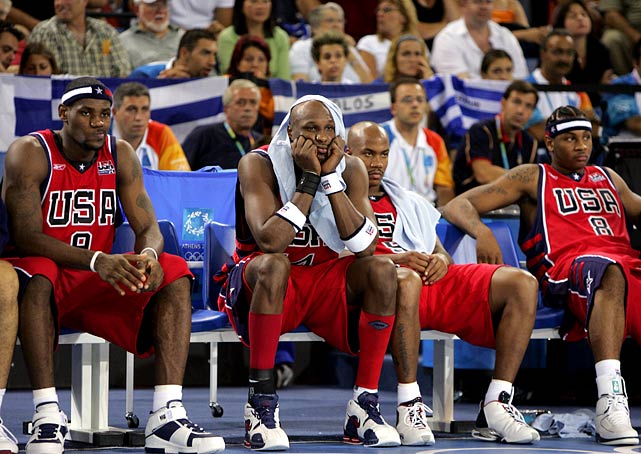
14.  The last few weeks before graduation feel a lot like this...


13.  As you pack up and sort your stuff, you find that one stupid little thing that you got at that one stupid little event and that has been sitting in the bottom of a stupid little junk drawer, and it makes you grin.  And you toss into into the "KEEP" box.  


12.  The reaction from a potential employer when you explain all of the leadership skills you learned...


11. You have decided to pursue, looked up how to pursue, or even just thought for a hot second about pursuing a career in student affairs or a job as a traveling consultant.


10.   You earn a Mr. Miyagi-like look of pride from your fraternity/sorority advisors.


9The accomplishments, victories, and great moments are running on a loop in your brain.  So are the failures, missed opportunities, and mistakes.


8.  Lately, when you see your brothers/sisters, you just can't help yourself from...


7. You actually graduate.  With decent grades. 


6. The one brother or sister that hated you, that was a thorn in your side, that always seemed to push your buttons, gives you some small notion - whether a handshake, words of thanks, or just a smile - that he or she respects you.


5.  After saying farewell at the final chapter meeting:


4.  When invited to attend a fraternity/sorority celebration years from now, you earn an introduction like this one:


Bono introduces Frank Sinatra at the 1994 Grammys
(easier to view in Chrome or Explorer)

3.  You've probably forgotten the fraternity history lessons you learned in pledging, and some of the famous names, and maybe even the Greek alphabet.  But you remember what Ritual felt like.  And after years of just reciting the creed, you now finally get it.  And believe it.


2.  You are ready for the world.


1.  The chapter is in a better position than it was when you joined, and most importantly, is in a position that can continue to thrive even when you're gone.  You harvested much, and yet, you planted more.  

Smile.  You did it right. 


Framing Fraternity

There is an old leadership parable that I heard once, and has resonated with me ever since:
A woman saw three men laying bricks…
She approached the first and asked, "What are you doing?"
Annoyed, the first man answered, "What does it look like I’m doing? I’m laying bricks!"
She walked over to the second bricklayer and asked the same question.
The second man responded, "Oh, I’m making a wall."
She asked the third bricklayer the same question, "What are you doing?"
The third looked up, smiled and said, "I’m building a castle."
I believe that in life, how you frame your experiences determines how you live them.

If you believe you are laying bricks, then that’s what you will do.  And that’s the limited experience you will face when you get out of bed each morning. 

And if you believe your fraternity or sorority is just another extracurricular activity or club, then that’s all it will be.  All it can be. 


The Dream Team Syndrome

It's March Madness time, so everyone has basketball fever.  I hope that your team, or your bracket, or both, are still alive!

Basketball is a compelling sport for people who love leadership like me.  There are so many lessons to be learned from the sport and how it's played.  There are moments in basketball when the five players on the court meld as one.  There are other moments when one star player just takes over the game and wills his/her team to victory.  There are also moments when some rookie kid comes in off the bench and saves the day.  In basketball, the outcome of each game can be determined in a wide variety of ways, which is why we're glued to our TVs and computer screens throughout March and April.


An entire leadership dissertation could be written from the movie Hoosiers alone.

There is one particular story from the game of basketball that I like to use when speaking to groups, especially when sending the message that group mission should always supercede individual agendas.  The thinking here emerged from my work with boards, although it can apply to any group.

I've spent time around dozens of fraternity and nonprofit boards comprised of supremely talented and successful individuals, and more often than not, I find myself baffled as to how they can be so dysfunctional as a group.  It's the Dream Team syndrome.

For those in their 20's and beyond, Dream Team doesn't likely need an explanation.  However, I'm now entirely aware of (and entirely bothered by) the fact that current college students were born in the mid 90's.

For many years, the United States (and other nations) sent its top amateur basketball players to represent our country in the summer Olympic games.  This meant college players for us.  In the late 80's, there was a push to change this practice.  Since basketball was increasing it's profile globally,  and since the International Basketball Federation wanted to increase the excitement around the sport, they made the decision to include professional players in future Olympics, starting with the 1992 games in Barcelona.  America was hesitant at first, but then want along with the plan.  Our college players had some mixed results, including a 3rd place finish in the 1998 games, so this was actually a chance to reclaim dominance in the sport of basketball internationally.


Team USA went to work to assemble what was described as the best professional sports team to ever exist.  The media quickly dubbed this ensemble "the Dream Team."  Michael Jordan, Larry Bird, Magic Johnson, Patrick Ewing, Karl Malone, and so many other hall of fame players answered the call to represent their country.

The United States then rolled through the 1992 Olympic games.  In fact, it wasn't even close.  The average scoring margin of the games was 44 points.  The rest of the world could do nothing to stop this team.  It was almost silly.

And why shouldn't it be?  Basketball was invented in America, and we have the best players in the world.  That's still true today.  Canada has hockey, Europe has soccer, and we have basketball.  We should be dominating that sport arguably more than any other in the Olympic games.  And in 1992, we did.

And in 1996.  And again in 2000 (although it was getting closer).

And then came 2004.

Up until this point, for the American people, a gold medal in basketball was a given.  We were crushing the competition.  There was more drama around who would be selected for the latest Dream Team than any of the actual games could offer.  And in 2004 in Athens, we again sent our best.  Dwayne Wade, LeBron James, Carmelo Anthony, Tim Duncan, and Allen Iverson among others.

Something seemed off.  This team had the star power, but not the chemistry.  That caught up to them.  The rest of the world had been steadily improving their game, and we had gotten lazy.  That became crystal clear in the first game of those Olympics when Team USA was stunned by Puerto Rico, 92–73.  After regrouping and winning a couple of games, they lost again (this time to Lithuania).  And then came another loss to Argentina in the medal round.  After all the dust cleared, the boys from USA wore bronze around their necks instead of gold.

What happened?  How can a hall of fame roster fall short to teams with players no one had heard of?

The other teams had to function as true teams in order to succeed.  Team USA tried to rely on individual talents, hoping that would be enough to dominate the competition.  But it wasn't.  The best players in the world lost to lesser players who happened to be on better teams.

Are the lessons for us?  Your fraternity, your sorority, your board of trustees, your office staff, your council - no matter what group of individuals you can think of - can fall victim to the Dream Team syndrome.  We cannot expect that simply finding the best individuals and throwing them together is going to mean anything for success.  You could assemble a dream team of all-stars, and it might start out great.  However, unless these all-stars accept the shared mission of the organization and put that ahead of their own personal interests, the group will fall flat on its face.  It's a simple lesson really: teams need to be comprised of people who believe in the team's goals.  A simple lesson that often gets set aside, especially when we are enamored by the quality of the star players.  

There is also a lesson from the Dream Team in the perils of overconfidence.  Years of success probably gave Team USA the belief that simply showing up was enough.  Add individual ego to the mix, and you have a recipe for the kind of hubris that crashes the loudest.

You may in fact fit that all-star billing yourself.  But remember, if you choose to play a team sport (such as fraternity or sorority), you need to place your personal ambitions underneath the team's objectives.  It's fine to have personal goals and personal rewards, but they should be the spoils of a greater team accomplishment.

Let's remember that recruiting outstanding men and women for our organizations is the first step, but we can't stop there.  Ask any coach of an NBA team: finding the all-stars is the easy part when compared to the grueling work it takes to intentionally build a functional team.  Whenever we can and wherever we can, we need to emphasize our shared values and our shared mission.  Teams that form around those things, and then fit their all-star individual talents into a plan to achieve them, are the ones that find the podium.


Mentor with Meaning

Has our casual attitude and approach to mentoring diminished its power?

A mentor of mine, Dr. Denny Roberts, once shared the opinion with me that the word mentor has become watered down.  I agree.  I'm  not one who generally cares about terminology battles, but I can get on board with this.  Mentor is now used all of the time to describe a wide scope of relationship types, of any length, depth, or value. You can be called a mentor if you spend an hour with a person, or a decade.  You can be called a mentor even if the impact you have is forgettable.  So-called "mentors" can come in and out of our lives like taxi cab drivers.  By the time we are in college, we've probably had dozens of individuals in our lives who were called or claimed to be our mentors. 

Lots of educational institutions and nonprofits now have "mentorship" programs.  "Be a mentor today" is a common slogan.  Mentoring relationships are even becoming predetermined.  Once, on a plane, I overheard a guy complaining to the person next to him about how much he dislikes his assigned mentor.

With mentor becoming relatively synonymous with having any well-intentioned interaction with another person, what term is truly left to describe the extraordinarily powerful, life-altering link between a person with guidance to share and a person eager to soak it up?  The link that turns a caring adult in your life into a father or mother-figure? What can you call the Yoda in your life, the Morpheus, the Mary Poppins, the Professor Keating?  With mentor becoming a benign, throwaway word in our culture, can it still do these types of relationships justice?


Dr. Roberts' concerns with our overuse of mentor came also from the historical derivation of the word.  Mentor was a character in Homer's The Odyssey.  If you remember, The Odyssey is a sweeping story of Odysseus and his adventures during his return home from the Trojan War.  While he was gone on his quests, Odysseus entrusted his kingdom and his most important possession - his son Telemachus - to the wise Mentor.  That level of trust was profound.  Because of Mentor's wisdom and regard, the Goddess Athena chose to take on his persona while giving Telemachus guidance that would alter his life. 

If you had to entrust your child with one other person in this world, who would that be?  Probably someone extraordinarily consequential to you.  Someone like Mentor.

Ever since The Odyssey, the word Mentor has come to mean a rare relationship that is longstanding, caring, and developmental.  Well - maybe not so much any more.

The purpose of this essay isn't to try to reverse how the term mentor is being used, or try to reclaim its significance as a word.  That probably can't happen at this point anyhow. I only wanted to share the information above as encouragement to all of us to remember, and not take for granted, the presence of true mentors in our lives.  Even if the word gets watered down, the relationships are real.  And you know which ones they are.


A lot of my mentors come from my college years.  I'm guessing that's true for a lot of you as well.  College is a time designed to force us into a journey of self discovery, and so we tend to be attracted to influential people who want to help us along that path.  Thus, fraternity can provide us these opportunities as well.  Consider for a moment your big brother or big sister program.  Some bigs and littles will define their relationship by gifts to each other and perhaps a deeper friendship.  Others will grab that chance to coach a younger member on how to draw the most power from the fraternity experience.  They'll seize the opening to mentor.

By the way, if you let down your guard, get to know them, and let your relationship with them flourish, Greek advisors can become some of the best mentors you could ever have.

Take a moment to think about who are true mentors in your life. Remember - there should only be a few.  Do these people know this?  If not, why wait to tell them?

And, consider another question. Are you currently, or have you ever been, a mentor to anyone?  As you look at it, you may need to downgrade some of the relationships you thought were mentorship because they aren't at that high of a level.  Or, if you want to continue to call it mentorship, then you may have to double your efforts to earn it. Give your heart and soul to it.  Make it matter more to the other person than it does now - more than they would have thought possible.

And, if it isn't a mentoring relationship after all, a caring relationship of any kind still matters immensely. Young people need those now more than ever. The Search Institute's research shows that the presence of a caring non-parent adult in the lives of young people could be the tipping point for their future.  It doesn't have to be mentorship to matter.  I have lots of advisors, coaches, supporters, and friends in my life who have made a difference for me.


But I only have a few mentors.

And to my mentors - I thank you. I'm sending you a personal note today to remind you of how much you mean to me.  You have earned every ounce of the meaning of that word.  And by now, you should know, that its a word I hold in reserve.  For only those rare relationships. For you.


Dr. Denny Roberts has an outstanding blog, Pursuing Leadership.  He is also the author of Deeper Learning in Leadership: Helping College Students Find the Potential Within.


The Walking Dead Within

I'm not a zombie guy.  I've never really been interested in zombie movies, or zombie books, or zombie survival kits, or anything else connected to zombies.  The closest I've ever come was my fascination with the Michael Jackson Thriller video when I was 7 years old.  At least those dead people could dance!

But, zombies are a big thing in our culture right now.  Millions of you watch shows like The Walking Dead on AMC.  I'm sure many of you reading this are convinced of an impending zombie apocalypse and are storing rations.

Here's the thing.  We've been fighting a zombie apocalypse for years.  They have been attacking organizations like fraternities and sororities, and in most cases they are winning.


Fraternity Culture: Lessons from Belligerent Baboons

A colleague recently introduced me to a fascinating study on primates, which has great lessons for organizations such as fraternities and sororities. 

Dr. Robert Sapolsky is a neurobiologist at Stanford University (smart guy) and has written many articles and books on animal behavior and how it relates to stress, socialization, and community.  One of his primary subjects has been wild baboons in Africa, and he even studied the same group (called a troop) of baboons for 30 years to observe their behavior. 

Dr. Sapolsky described why baboons are good animals to study and learn from:

"The reason baboons are such good models is, like us, they don't have real stressors," he said. "If you live in a baboon troop in the Serengeti, you only have to work three hours a day for your calories, and predators don't mess with you much. What that means is you've got nine hours of free time every day to devote to generating psychological stress toward other animals in your troop. So the baboon is a wonderful model for living well enough and long enough to pay the price for all the social-stressor nonsense that they create for each other. They're just like us: They're not getting done in by predators and famines, they're getting done in by each other."

Baboon troops tend to be dominated by highly aggressive alpha males. These males acquire power like bullies do - by being physically aggressive and intimidating.  Dr. Sapolsky casually describes them as acting like jerks in order to get what they want.  (Sounds kind of like that guy in your chapter who loves to talk about hazing so much)

The particular baboon troop that Sapolsky was studying was struck by a tragedy, which created a very interesting turn of events.  Here is how it was described in a 2004 article from the New York Times: 
"...researchers describe the drastic temperamental and tonal shift that occurred in a troop of 62 baboons when its most belligerent members vanished from the scene. The victims were all dominant adult males that had been strong and snarly enough to fight with a neighboring baboon troop over the spoils at a tourist lodge garbage dump, and were exposed there to meat tainted with bovine tuberculosis, which soon killed them. Left behind in the troop, designated the Forest Troop, were the 50 percent of males that had been too subordinate to try dump brawling, as well as all the females and their young. With that change in demographics came a cultural swing..."
Sapolsky's study is profiled on Stress: Portrait of a Killer
The cultural swing was a move away from stress, fear, and loathing, and a move towards community, peacefulness, and mutual support.  In short, with the jerks gone, the good guys and gals took over.  The toxic environment went away with the belligerent baboons. 

The troop thrived with this new culture.  But even better - they found a way to ingrain this culture and protect it against returns to old habits.  The young males were raised in the new culture and embraced it.  Many outsider baboon males that tried to enter the troop and use the old-school methods of aggression and nasty behavior to assume control were thwarted by a culture that wouldn't stand for it.  Their choice was to accept these norms or move on.

Dr. Sapolsky found that this new behavior was still the norm and culture 20 years after the tuberculosis incident.

Organizational culture is a powerful force.  Not only does it dominate the scene within an organization, but it also affects the behavior of current and future members.  The strange irony is that culture - while critically important and complex - can be influenced so greatly by only a few.  Have you ever had a horrible boss that made the whole work environment toxic?  In the example from nature above, the few dominant alpha male baboons behaved in a way that made the pack tense, stressful, and negative.  Their departure changed that almost immediately.

Don't we all desire fraternities and sororities that bring out the best in each member?  That are places people come to find refuge from stress and isolation?  That are democratic in how decisions are made and directions are chosen?   That are positive and uplifting?

If your chapter's culture is the opposite - stressful, tense, and negative - then take some time to look around.  It may be a simple matter of who is holding the reigns of influence.  Too many of our chapters are held hostage by dominant personalities that are self-serving, mean-spirited, and aggressive. 

Maybe it's time for them to leave (in a much more pleasant way than the dumpster-diving baboons).

It isn't always the leaders either.  It can be the advisors that create this stressful environment, or perhaps older members who use their age to gain stature.  Why should we tolerate anyone who drains life out of our organizations?

There may be other ways to change your organizational culture, but the simplest and most effective way is to dismiss those that would do it harm.  There may be no greater tool for culture shift than the exit sign. 

You might think that it's too difficult...that it's easier said than done.  It requires standing up to power.  The baboons in the study never did this at first - they just stumbled into their new culture by accident. 

It's a good thing we're not baboons.  We're humans who can summon up the courage to control the destinies of the organizations we care about.  But will we? 


A Livestrong Movement for Integrity

Dear Mr. Armstrong-

Well, there’s no need to pile on at this point.  You’re having a tough week.  I was never one
who idolized you, but I certainly admired your ability to inspire so many.  I wonder how that “so many” are feeling today. 

I’m writing to offer you a suggestion.  Clearly, you have talents that do not require
performance enhancing drugs.  You built a worldwide movement with a rubber yellow bracelet for goodness sake.  You know how to rally people to fight against a dangerous force.  The first time it was cancer. 

Cancer didn’t seem to have a chance against you.  And you inspired others to have that same
attitude in their fight against the disease.  Now we all see that you should have left it right there.  You didn’t need to win another bike race to be an inspiration and to lead a movement.  That’s when you got into trouble. 

So, what now?  I suggest you take all that you learned from your battle against cancer and apply it towards another scourge trying to take over our world:

The increasing absence of integrity.

The world is really struggling with integrity right now and congratulations, you just became the poster child.  You might as well make the best of it.  It’s time to lead another movement Lance.  It’s time to broaden the idea of Livestrong to include leading an honest and ethical life.

And I don’t think you should do this just for the sake of redemption.  You should do this for the same reason you created the Livestrong movement – because you can teach us how to deal with the pain.  You can instruct us on how to lift ourselves up when we are defeated.  You can show us how to find strength in our weakest moments.

None of us are perfect.  We all have had ethical failings.  The difference is that you tried to build your entire legacy on a foundation of dishonesty.  Young people can learn from their friends and families how to choose between right and wrong.  But you can reveal to them how tempting it is to risk (and lose) your soul for the sake of winning a trophy. 

There is a young person out there starting their business career who may soon be invited to take a shortcut to the top of the ladder.  There are likely thousands of young athletes every day who want a championship so badly that their mind has entertained the idea of drugs.  There are budding politicians who want to be selfless but see so much power amassed by those who don’t seem to be.  They need to understand the consequences through your example.


So do the fraternity and sorority members who deal with their own share of dilemmas and difficulties.

They need to see that integrity matters again. 

Instead of letting your example rest as a warning to others, let it set you free.  Like your book is titled, it’s not about the bike.  It’s about the person who rides it.

So, take that marvelous marketing brain of yours and apply it to this next great challenge.  Get ready to tour the country talking about how you are now trying to overcome a different debilitating disease.  There are so many self-righteous people out there, and I think we’re more willing to listen to someone who tried to win without integrity and lost horribly.

And if there is a bracelet involved, I’ll wear it. 

Good luck.


Toward a Definition of Brotherhood

What is brotherhood?  I’ve often found that it’s a difficult concept to put into words.  The dictionary just can’t seem to do it justice.  The same with sisterhood. 

A common answer I heard during rush was:  “it’s just something you have to experience to understand.”  I probably said that to recruits as well.

As I’ve moved along in my fraternity journey, I think it’s becoming easier for me to define. Brotherhood is not as vague and intangible as it once was for me. 

At this point, if someone were to ask me to define brotherhood in the fraternity sense, this would be my reply:


Approachability Matters

For many years, I’ve been confident in what I feel is the single greatest leadership skill. Without it, I tell students and adults alike, no leader can succeed. That skill is listening. 

Now, after much thought, I think I’ve decided upon an equivalent, if not greater, leadership skill: approachability.   

If someone isn’t approachable, the skill of listening can’t be used and thus doesn’t really matter. Those you lead, or want to serve, need to recognize you as someone they trust enough to visit and talk with. To them, you must be seen as a room that is inviting to walk into. 

Have you ever had a boss or a leader who made you more nervous than comfortable? I’m sure the old-school types will say that intimidation isn’t a bad thing, and maybe that works for some. But I don’t think it works for most. It never worked for me. If the essence of leadership is relationships, then approachability has to matter. Without it, leaders become isolated. Their influence withers. 

If you want to improve your approachability, start with your communication skills (back to listening) and your emotional intelligence. For example, take this next week and practice hard at being completely devoted to every conversation in which you find yourself. Keep the cell phone put away, and pay attention like you never have before. You may find something unusual happens - people can't wait to talk with you!

Approachability is clearly an essential quality for organizational advisors who work with young people. An advisor cannot do their job if the students he advises chooses not to interact with him. And the best advisors try to be approachable to every student, no matter their background or beliefs. 

For students, you have a Greek advisor on campus, and they are there to support you and help you grow. In order to do that, they need to be in a position to coach you, mentor you, and simply talk with you. So, how approachable is your Greek advisor? Do you walk towards him or her eagerly, or gingerly?  We could ask this about your chapter/alumni advisor as well.

For advisors, we should routinely take some time to investigate our approachability. It starts with observing what is happening around us. Approachable leaders will have a lot of drop-in traffic. They will also find themselves in many conversations that they do not initiate. Students will be genuinely excited to spend time with an approachable advisor. Also, if we are approachable, we may find that people want to discuss big things with us. We will often hear “hey, can I run an idea past you?” That’s the fun stuff. 

When I worked as a campus professional/advisor, there was no quality I held more sacred than approachability. I worried about it almost every day, and did anything I could to avoid losing even an ounce of it. This probably made me an overly careful person who worried too much about how others regarded me. But, given that I chose a profession that was all about relationships, I can still justify that degree of cautiousness. 

It all boils down to this for me - if you sign up to work with young people, from Kindergartners to college students, you have the responsibility to be approachable. Otherwise, you can’t do your job. 

Politics and Approachability
I’ve had something weighing on my mind. We just went through a contentious election and over a year’s worth of political battles. And, I’m sure you would agree, civility was in short supply. I was quite amazed at how many youth development professionals - including fraternity and sorority advisors - were wide open about their politics on social media sites like Facebook and Twitter. And it wasn’t just “I think Romney is the right guy,” or “I’m glad Obama won.” It was quite intense at times. 

Saw this posted many times. Usually followed by a political post.
There shouldn’t be anything wrong with this, right? The students who follow us on these sites shouldn’t expect us to filter our beliefs and passions, right? Free speech is still one of the bedrocks of our nation. So is our ability to make choices and live with the consequences. 

Our choices influence our approachability. Politics is a hot-button issue that often causes emotions to triumph over rationality. Should a student, who is still trying to figure out their beliefs, be able to see a tweet from their advisor that enthusiastically puts her political stripes on full display and be able to compartmentalize it? Sure.  In this day and age, will they?  I’m not so sure.  It’s probably why I’m a chicken about sharing those kinds of beliefs in public. 

Some may wonder if my reticence to share politics out loud like that means I’m not as confident in my beliefs. My reticence is simply practical. I want the conservative Christian pro-life Republican and the liberal environmentalist pro-choice Democrat to feel equally excited to walk through my office door and share their dreams with me. 

I'm not trying to tell any advisor what to do. My choice to not broadcast most of my personal beliefs about politics, religion, etc. has worked for me - and it is my choice. There have been many times I’ve wanted to post something on my Facebook page about sensitive topics, but I’ve held back. I share those thoughts with my friends and family instead. 

The point is, approachability matters. And it’s not something that emerges without attention and thought. Those of us in positions of leadership and influence should be driven by the answer to fundamental questions: if I open the door, who is excited to come in and see me?  And who isn't? 


The Things I Learned From Joining a Sorority

By Jen Glantz
 

Most of the decisions we make when we are 18, fall apart. When I was 18, the Registrars office at my University knew me by first name since I filed a “change of major” form once a week. And the day I decided to go get an ink stain on my wrist and piercing through my lip, I walked out of the tattoo parlor with nothing more than a temporary tattoo on my elbow.

6 years later, the only decision I made back then that has not fallen apart was when I decided to join a sorority.


Just the other day, I was in the middle of a conversation with a man who was not from this country when he shot me a look into my tea cup eyes and asked me sternly, “What is a sorority?”


Where, oh where in this world, was I supposed to start?


I told him it started in the most simplistic chaotic way. Six years ago, I went to college and a girl named Heather who I knew from my hometown, told me about a thing called sororities and this crazy little thing called “RUSH”, which at first sounded like a heard of freshman trying to navigate their way around campus continuously crashing into each other, but turned out to be a term for speed dating sorority women. This girl, looked my bun-head, punk rock style, freshie self and said, “Jen, you really should come see what it’s all about.”


And my skeptical, “this is SO not for me” rebellious mindset started kicking through my bones but I went through sorority recruitment anyway and I found these girls who learned all about who I was and instead of laughing at my weirdo ways, took me by the hand and ran with me, making me feel like it was okay to be a little different, and 6 years after joining, they never made me change who I was. 


They only made me grow up, just enough.
 

Living in this 9-(whenever I get out of work) real world, I only ever hear about sororities, unfortunately, when they are in the news for bad, unthinkable, things. And whenever I introduce the fun-fact that underneath these black slacks and 9pm bed time ways, I am a “sorority girl”, people always ask me about the hypothetical terrible things they assume I endured. But they, and you, will learn that like anything else in this world (boyfriends, jobs, hobbies), you get whatever it is you put into it and you must only stand beside people and things you believe in, or else you will fail miserably.

There are many different sororities, with many different women who join them and dance with them for different reasons. I can only fairly speak on behalf of my experience, so I won’t generalize or stereotype the whole sorority experience as being “rainbows and butterflies”, but I'll tell you this.


When you ask me about the crazy parties or rumors of nasty, degrading hazing, I’ll tell you that at the age of 18, I was the newsletter chair of my sorority because I loved to write. At 20, I was the Vice President of Philanthropy, raising tens of thousands of dollars for two causes that were founded or influenced by sisters. At 21, I was the President, but more importantly the role model of 150 impressionable and resilient women.


It does not just matter why you joined things or why you started something; we start new things every day. Job positions, inseparable relationships, lines outside of Jamba Juice, goals to finally hit up the gym.  It’s about what keeps us, if we stay.  And you will learn, that if you stay for the long-haul, the marathon sprint, you’ll stay for the right reasons.  Because the wrong reasons exhaust us, make our faces wrinkle and our hair gray. Leave us with upset stomachs and indigestion.


You’ll see.
 

Some things in life stay together, but most things will fall apart. Hold on real tightly and celebrate the nouns that keep you from falling apart.


 Jen Glantz is a 20-something crawling the streets of NYC. You can find her in a tutu and converses, surrounded by overdue library books, pizza crust and the spontaneous combustion of laughter that often shoots the chocolate milk right out of her nostrils. Jen is a proud graduate of the University of Central Florida, where she received her B.A. in both journalism and English. Read Jen’s latest work on her blog “The Things I Learned From,” (www.thethingsilearnedfrom.com) or shoot her an email: jenglantz@gmail.com.