Smoking Out Hazing

Note: This post was first written for Phi Delta Theta and published in September 2010 at their blog: phideltblog.com (without question one of the best blogs in the fraternity world).  I wanted to give new life to this essay in honor of National Hazing Prevention Week 2012.  Some passages have been updated and revised.

The other day I was flying back home and while sitting on the plane, I noticed the “no smoking” signs all over the cabin.  This wasn’t a new observation, but I stopped to think about what it must have been like when smoking was allowed on airplanes.  Imagine the guy next to you, sharing your armrest, smoking a half a pack between takeoff and landing.  And you couldn’t escape.  You just had to deal with it.  That’s the way smoking was all over our country not that long ago.  Restaurants, grocery stores, taxi cabs, and hotels were filled with smoke.

And now?  Light up within 100 yards of a nonsmoker and you’re treated like you have the plague.  The only safe place for smokers to go is out behind a building right next to the dumpster.  It is safe to say that most places in our society have grown intolerant of smoking, and those who choose to do it are often isolated.  Smoking still takes place, and consumption levels are still high.  There is just a different attitude toward the practice, especially among young people.

I believe this change over the last decade or so was accelerated by an extraordinary anti-smoking campaign, called “The Truth”.  You have probably seen their commercials, one of which shows a group of activists carrying megaphones lining hundreds of body bags on the street below the offices of tobacco executives.  This campaign has been effective in reducing smoking – especially in young people – because instead of focusing only on the health reasons, it turns nonsmokers into rebellious youth sticking it to the “man” (tobacco companies).  Rebellion has always been a well-received message amongst teens!


The campaign is also effective because it involves young people talking to other young people.  Peer to peer education works.

So what does this have to do with hazing?  From my observation, the vast majority of anti-hazing messages that are delivered to college students come from much older adults.  It feels like a parent telling their child to “stop doing that” because “I know better than you.”  While we’ve made strides against hazing, there certainly hasn’t been the same momentum like we’ve seen against smoking.  We need acceleration.


Let me offer a vision.  What if fraternity and sorority undergraduate members became the chief activists against hazing in our society and brought that message to their brothers and sisters, as well as their peers in sports, the marching band, or other clubs on campus? 

Let’s take it one step further.  Where I live in Indiana, there have been some high-profile hazing incidents in the high schools.  What if fraternity and sorority members were invited into high schools to educate students about the dangers of hazing?

We understand hazing because it has been a vicious scar on our legacy.  So, let's make amends by being the world leaders against it. 

The messaging could be similar to that of “The Truth” campaign – hazing offers power-hungry meatheads the chance to bully others, and we’re not going to take it anymore!

Perhaps this vision is not yet within reach.  What is within reach is your personal influence within your own chapter.  It’s not enough to be quietly against hazing and just hope that it will go away.  I tried that approach, and it didn’t work.  If you want to see hazing eliminated, you need to pound the pavement and work against it.  Find like-minded members and start a rally within your own organization.  Put the “no hazing” signs right next to the “no smoking” ones.

Hazers are like tobacco executives – getting compensated for promoting an unsafe practice.  Treat them as such.  Turn the chapter against them.  The ones who matter will allow themselves to change.

Imagine if the one place on a college campus where a person could know for sure that they would be safe from hazing was your fraternity.  Or any fraternity.

It’s great to be against hazing.  It’s better to make sure it has no place in your fraternity.  Working to eradicate it from our society is even better than that.  Let’s stop reacting to this issue and start leading.   

Grab your megaphones.


Fraternity Expansion: Take a Number

Submitted by a staff member at a men's fraternity.  Edited slightly with permission.


A young man enters his freshman year of college ready and excited for the adventure ahead of him.  He has anxiously waited for this day, hearing fond memories from his father about his days as a fraternity man; days that forever changed his life.  The young man’s father has introduced him to his brothers, taken him to chapter alumni events and even bought him a t-shirt with his organizational letters.  He is a legacy.

The young man is accepted to a different state institution than his father, and his father’s organization is not represented on campus.  He signs up for fall recruitment with an open-mind and visits all of the chapters on campus.  Frustrated with the chapter members’ interest in alcohol and the lack of brotherhood, he drops out.  The semester continues and the young man makes several good friends through his residence hall, getting involved with student government and participating in intramurals.  

During winter break, a friend attending a different university shares he is pledging a fraternity and will be a founding father.  Curious about his experience, the young man e-mails his friend and learns more about the process.  He is first intrigued, and then enthusiastic.  Could he start his own fraternity?  What a great opportunity and a great tribute to his father.

As soon as he returns for the spring semester he quickly recruits 15 men from his residence hall, student government and his intramural team.  His friend told him that he would need at least 20 guys to be taken seriously by the IFC.

By February, he has set up a meeting with the campus fraternity and sorority advisor.  He has downloaded the IFC constitution, as well as information from his father’s fraternity website about expansion.  He and the two other “soon-to-be-founding-fathers “ walk into the advisor’s office organized and prepared.

Through their conversation they learn that another fraternity just colonized on campus.  The advisor informs the men that there is an order of when fraternities are able to colonize on campus.  If they want to join a fraternity, they can join the new colony or one of the existing chapters.  The students leave the office deflated, discouraged and frustrated. 

The young man calls his father and lets him know that he isn’t allowed to start the new fraternity, despite their best efforts.  Even worse, he won’t be able to carry on the fraternal legacy.

Flash back more than a hundred years.  A young man decides to go to college in a rural farm community.  He is the first in his family to attend college and very intimidated by the size of the buildings, the demanding professors and the academic expectations.  However, he finds solace in the conversations and debate that occurs between him and his friends each evening.

This man, like so many men and women, were told by their higher education institution that literary societies were not permitted.  The institutions had regulations and policies they must abide by.  Sound familiar?  However, they persevered and established a tradition of fraternal excellence that has spanned more than 150 years.

So why is it today we are still battling limitations on our freedom to associate with host institutions?

Policies and regulations are much tighter than they were 15 years ago when it comes to expansion, and include: 
  • Scheduling fraternity expansion 5 to 10 years out.
  • Requiring scholarships and financial contributions to local governing councils.
  • Imposing regulations on colonies that aren’t required of other fraternities and sororities.
  • Headquarters courting campus professionals to ensure their selection during expansion.

All under the auspices of fairness, balance, and control.

And because of that, have we let the needs and desires of existing groups (including their fear of competition) trump the needs and desires of unaffiliated students?

Have we accepted that notion that all fraternities are the same?  That it doesn’t matter which ones exist on a given campus – only how many?  That one fraternity can’t offer anything different than another? 

Is it acceptable that fraternal organizations are expected to invest $3000 - $6000 per campus to “present” to a group of undergraduate leaders and campus professionals on why they should be “allowed” a place on that campus? You better send the executive director as well!

If the intention in doing all of this is to “change the culture or our communities”, is it working?

Why do we have Interfraternity Councils that have become the roadblocks to fraternity expansion, taking over for the authoritarian administrators of yesterday?   What might our founder’s say? 

Times have changed, but the limits on our ability to associate haven’t.  The troubling thing is that the regulators have become IFCs and professionals who believe in the fraternity movement.  Just at their own pace it seems.

In the past, staring in the face of opposition meant looking in the eyes of headmasters and professors who resisted anything they couldn’t control.  Now, in many ways, the face of opposition we are staring at is our own.


[This staff member wished to remain anonymous, ironically enough, so that the fraternity's expansion efforts wouldn't be harmed]


Road Warriors for Fraternity

I'm called many things.  Field staff.  Field rep.  Traveling consultant.

No matter what you call me, I know what I am in my heart.


Road. Warrior.


And this is my creed.


I will build a brighter future for fraternity, one chapter at a time.


I will learn to live out of a car.  And how to get through airport security with Olympic sprinter speed.  Just give me a month or so.


I will be terribly nervous.  I will probably care too much about what others think of me.  I will try too hard to make friends.  Give me a month for this one as well.


On paper, I am a cost-effective way to bring the office closer to the members. I make the finance staff smile. I was promised a terrible salary and that's what I got. I was also promised adventures and that's what I'll get.


I understand that on the org chart, I'm near the bottom.  Probably below the guy who comes in to fix the copier.  But on the influence chart, I'm near the top. I am the front line.


There are staff back at the office complaining about a certain "dysfunctional" chapter. They’ve
 seen their balance sheet, their web page, and their reports. I'll be standing in their living room on Tuesday. I will see them.

My fraternity needs me.  And needs me to be strong.


I will discover soon enough that truck stops have the best food, and that the world's biggest ball of twine is worth the 30 minute diversion.


I will speak and present dozens of workshops.  But, I know that the difference I will make will be through individual conversations.


Listening is my greatest tool.

I understand that a few encouraging words from me can be the difference between a weary president who quits and one who perseveres; between the member who becomes lost and the one who moves one row closer to the front; between the advisor who drifts away and the one who re-engages.

I will prepare for each visit like Peyton Manning.

I will allow myself several fist pumps after a successful visit.  And a big helping of ice cream after a bad one.  Actually, ice cream either way.


I will proudly represent my fraternity or sorority through my actions.  I am Ritual in motion.


People in the airport will be impressed by my kindness to the overstressed gate agent.  I will let people merge in front of me on the highway.  I will wave at construction crews and say thank you to every military person I see.


I will be a happy road warrior.


If I get pushed to the brink, I will call a timeout.
  They need me to be wise – not an exhausted jerk.

As Hunter Thompson put it, everyone needs psychic anchors in their life, and I will find mine.  Be it church on Sunday mornings, or Game of Thrones on Sunday nights, or the cheesy hashbrown casserole at Cracker Barrel.

I will learn to push and challenge.  I will develop the rare skill of being the “lovable tough guy.”  That may take more than a month.

I will work my tail off to move the needle.  Some days it will move a mile, and most days it will move an inch.  But it's moving.  My fraternity cannot afford a day in which it doesn't.  

And some days will be chaos.  No matter how stressed, emotionally spent, tired, or road-weary I am when I get the fraternity's front door, it's game-on when I walk inside.

I will be discounted for my age by university administrators, chapter advisors, and almost everyone else.  I will have to prove myself.  I’ll wear a suit to big meetings.

And I’ll remember that my age is an asset.  I’m not ready to be old and cynical yet.

I will forgo the chain restaurants in favor of the famous campus pizza parlor.  And places with names like "The Flying Gila Monster" in towns with names like “Bug Swallow.”

Even if I don't like a member I meet, I will believe in him or her.

I will give each chapter a chance.  And they will get my best.

I will spend more time alone with my own mind than ever before, and will be better off because of it.


I will have lots of stories to share.  Like Buffett sang: "some of it's magic...some of it's tragic..."

My belief in the fraternity movement will be shaken, broken, rebuilt.  Daily.

I will say to the members: you can confide in me, but remember something important.  If you reveal something that puts you or others in danger, I will intervene.  Not because I am from the national office.  But because I am your brother.  Your sister.

I will not ignore my gut.  Or the butterflies.  Or the loneliness.  Or the spectacular feeling of winning. Or the handshakes, hugs, and “thank-yous” I didn’t expect.

I will trust my instincts, lean on my training, and make huge mistakes anyway.

I will say “I can do this.”  Again.  Again.  And again.

And on those days that go terribly bad, when every conversation seems pointless, all my efforts seem worthless, and the future seems hopeless,  I will return to my car and take a few minutes to be upset.  Sit in silence.  Or blast the radio.  Or call a friend.  But I can't take long.

Because there is another small town to drive through.
  Another chapter up the road.  I need to get there by tomorrow, climb the stairs, ring the doorbell, and try again.   

Because my fraternity still needs me.   

The road is long, but warriors don’t give up.

Especially road warriors.
  Like me.


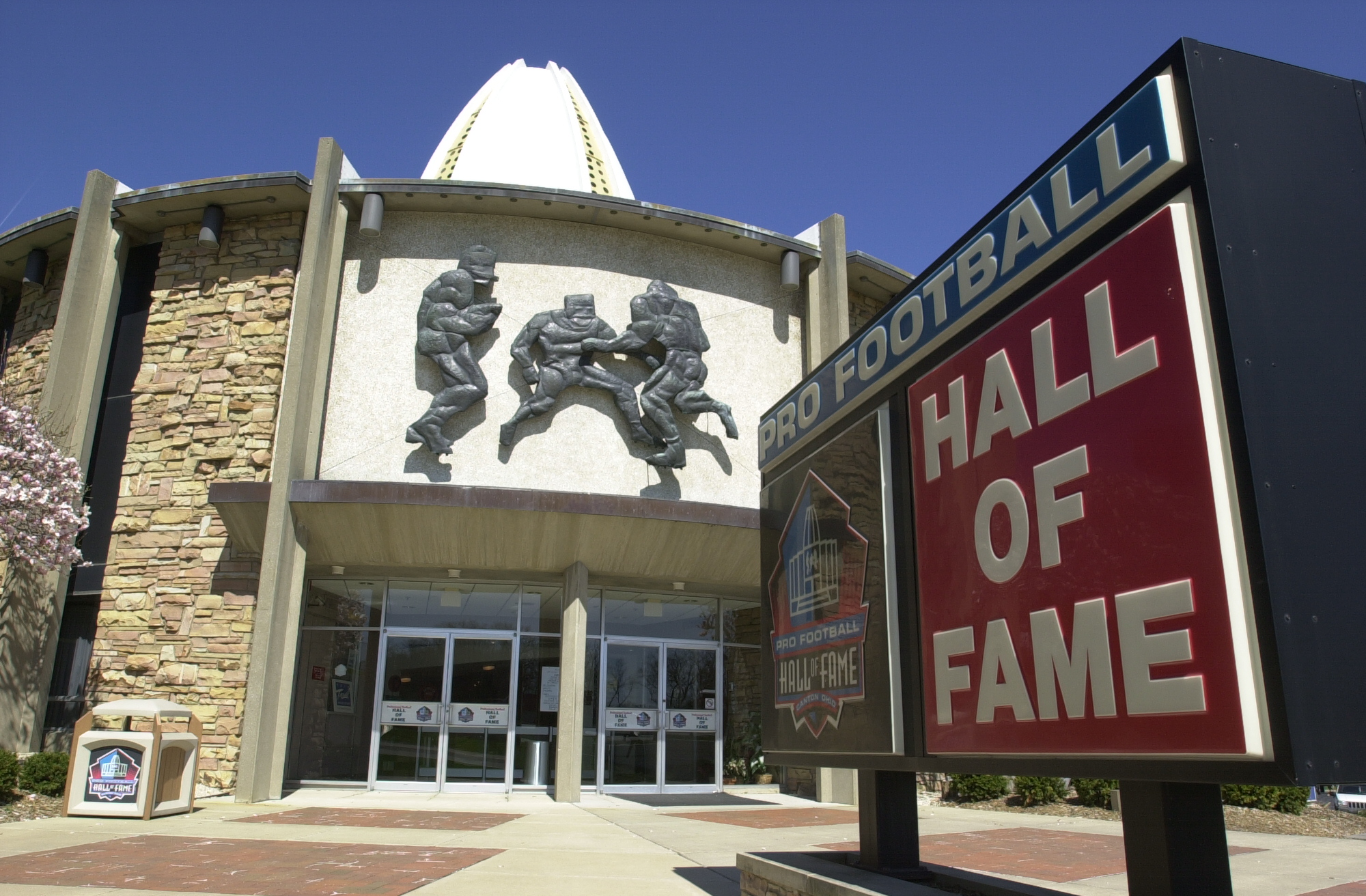
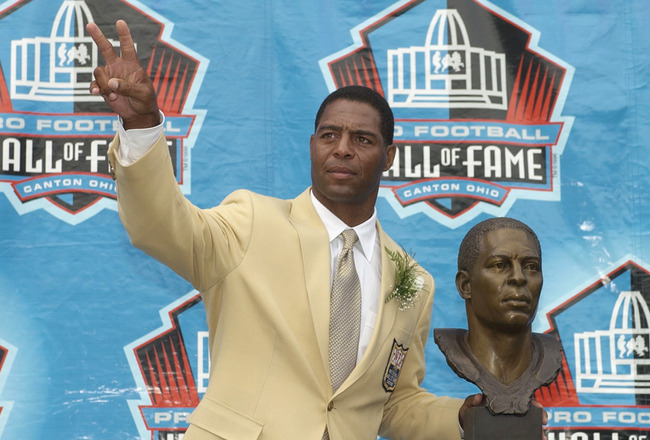
Which Hall of Fame are You?

This past weekend, the National Football League inducted six players into its Hall of Fame in Canton, Ohio.  Major League Baseball did the same a few weeks ago in Cooperstown, New York - although they only inducted two. 

[2013 update - no one was voted into the baseball hall of fame]

In sports, reaching the Hall of Fame is a crowning achievement.  It means that in your chosen profession, you were the best of the best.  Halls of Fame are a way to separate the highest performers from the rest of the pack. 

However, they wouldn’t be as significant if they weren’t so restrictive.  If just above-average statistics and achievements were all it took to get there, then the Halls would lose their prominence.

Some Halls of Fame are criticized for being too difficult to get in - such as baseball’s.  On the opposite end, the NBA Hall of Fame is criticized for selecting too many and for criteria that seems to reward popularity over achievement. 

The criticism on either side results in this: the MLB and NFL Halls of Fame have stayed cherished, significant, and profound, whereas the NBA Hall of Fame is viewed with much less reverence. 

The MLB and NFL Halls of Fame seem to take pride in how difficult they are to enter.  Over the last three years, the NBA Hall inducted 29 individuals and 3 full teams.  The NFL Hall inducted 20 individuals.  MLB inducted 8. 

In fairness to the NBA, they induct more than just NBA players.  They have inducted collegians, international players, high school coaches, etc.  However, this also means they are criticized for not being focused enough.

It seems - from this outsider’s point of view - that the MLB and NFL halls put more time and rigor into their selection process than the NBA.  They seem to have unwavering standards that are almost never compromised.  Inductees are debated endlessly, and it may take years for someone the public deems worthy to be chosen for their Halls. 

Again, the result of this high attention to standards is that the public perception of these Halls is stellar.  Sure, every year the sports talk shows and fans yell and scream about the omission of their favorite players, but they never lose reverence for the honor.  Because that’s what it is seen as - a high honor. 

On the flipside, does anyone really pay attention to the NBA Hall of Fame in the same way?   

If you had to choose a model, I would suggest somewhere between the NFL and MLB.   The various sports halls of fame seem to teach us that being perceived as too lax in selection criteria has greater negative consequences than being perceived as too strict.  This means that you don’t just give a bid to anybody.  You select those who fit your high standards of character and achievement. You analyze and debate potential members based on their merit.  There will be some good men or women you turn away.  Because, they aren’t as good as the ones you want. 

By the way, there is a wide chasm of difference between having very high standards for recruitment (good) and making pledging so grueling that it weeds people out (stupid).  No Hall of Fame hazes its inductees.  They reward achievement and success that occurred before the person was nominated for the Hall.  You should study, analyze, and debate potential members as much or more than the selection committees debate potential Hall of Fame inductees.

Pledging - if you must use it - should NOT be used to help you discover if someone is worthy of your fraternity/sorority, but should be used to provide baseline education to those who are already worthy. 

You probably know the fraternities on your campus that are a little looser in their standards.  It’s clear to see.  You also know those that have high standards.  Those are the groups that you watch when issues arise, to see how they react.  Just like a good Hall of Fame, they can set the tone for success.  Which one are you?  If I spent a week on your campus, who would I say is setting the tone for excellence? 

A word of caution: with this analogy I am not trying to argue for highly-elite, super-selective fraternities and sororities.  Don’t become the Omegas from Animal House.  You need to define the standards for your group, and then live with the outcome.  My larger point is that when you demand and expect excellence, you earn respect from your peers and the public.  You become the Hall that people pay attention to, and that potential members want to join.

Visual Values

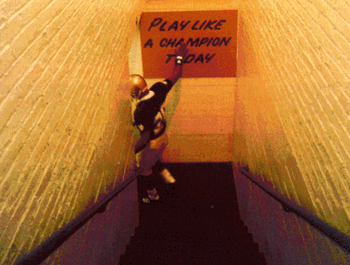
I had the privilege recently - through my job at Kiwanis International - to travel to Fort Knox, Kentucky and visit the U.S. Army installation there.  Fort Knox houses all of the Army’s human resource and recruiting operations.  They also have a very strong education division, which is who we met with.  Anyhow, I had been there before, but this time I took notice of the stairs that led to their main offices:


The U.S. Army is very big on values. They are printed everywhere, and everyone at Fort Knox knows them. The primary values, as seen above, along with the Warrior Ethos, are what all soldiers take to heart.

More on the army in another post. The purpose of this one is to illustrate the power of visuals.  Like the Army, we are values-based organizations.  How visually evident is that fact?

For those of you with chapter facilities, how are the values represented on signs, banners or the walls? If I’m walking up the steps of your chapter house, can I see what I’m walking into?

And no, a white sheet hung outside your chapter house that says “rush XYZ, text #5555” is
not what I’m referring to.

At your chapter meetings, are there visual reminders of your values?  For those who use written agendas, are they stated on the paper?  The most effective nonprofit boards I know do this, or they hang up a sign at every meeting that states the organization’s mission.  It’s
powerful because during the most heated discussions, or those that seem like a waste of time, all members can point to the sign and say, “how are we achieving that right now?”

If you have a house, you can sprinkle references to your values all throughout.  It’s easy decoration, and creates a message that’s hard to escape.  Here’s an idea for a random morning: take a dry-erase marker and write on the bathroom mirrors, “how will you have integrity today?”

If you have a dining room, make table tents that share quotes/stories about your values.  At move-in day, when parents are likely to be at your house, make a huge banner that says something like: “this home is built on scholarship, service, brotherhood, and leadership.”  Get creative.

And of course, we have to discuss T-shirts.  What do yours say?  How does it remind the person wearing the shirt, as well as those who see it, of what you stand for?  T-shirts make us walking billboards, and too many times, our billboards turn people off to the product we’re selling. Instead, they can be a tremendous opportunity.

Several years ago, at a UIFI session, I vividly remember a young man standing up in front of the group and reciting his 
fraternity's creed, which spoke about being a perfect gentleman.  He did this while wearing a shirt that had a cartoon image of a man fleeing a half-naked woman lying in a bet, with the words: “XYZ Fraternity: We screw, we nut, we BOLT.”  

The moral of the story, visuals can be a force for good or evil.  Make yours a force for good.

Visuals matter because they remind our members of the values we strive for, they tell others the same thing, and they keep us honest about living up to them.  If you paint your steps with the same kinds of powerful words that the Army does, then in essence, you are making no secret of what I should expect when I walk inside.  Good. Now deliver.


The Times of Pampered Kids and Cynical Adults

There has been a lot of buzz lately about the commencement speech delivered below, and its message to young people that they are not “special.”


I love the speech.  David McCullough, Jr. did an excellent job framing his argument, using humor, and being direct in his opinions.  I guarantee the speech caused most people in the audience to think differently about something, which is the point of good speeches.  I also liked his attack on cliches.  He closes the speech with powerful - albeit not new - advice on how to succeed:  don’t wait for success to come to you, and do things for selfless reasons.  Good stuff.

But I am bothered - not by the speech itself - but by many of the reactions in support of the speech.  All across the spectrum - from national news outlets to my own social media connections - the cheering of his message has taken on a life of its own.  It seems that people couldn’t wait to say: “yeah kids - that’s how it is!”

It is conventional wisdom now to believe that kids are too pampered, and that parents bolster their self-esteem too much.  Of course these things are true in some cases, but is this really a big issue? College applications are more competitive than ever. Job applications are more competitive than ever. Do we really think these kids aren't capable of seeing that real life doesn't have 7th place ribbons like their soccer league did?

We critics of this generation should take it down a notch.  It’s true that many parents overdo it with praise and are too quick to rescue their son or daughter from mistakes.  But, there are bigger problems in our world, right?  What about the parents who overdo it with criticism?  What about those who are absent?  Shouldn’t we be more concerned about them?

These kids are starting their lives.  A knight who goes to battle in armor will likely get hurt.  A knight who goes to battle without armor will likely get killed.  Parents spend 18 years trying to strengthen the armor, and too many of us take joy in the chance to strip it off.  We're at war with youthful exuberance. Just so we can tell these kids how it really is.  Or maybe, feel better about ourselves?

I like young people to be brash, full of confidence, and ready to just go for it.  To feel bulletproof.  That’s their thing.  The contribution that 18-25 year-olds make to the world is their enthusiasm.  Their optimism and self-efficacy are their gifts to the rest of us. They bring balance to our universe.  


Do you remember your graduation and the days after?  I remember mine, and the feelings I had which can be best summarized as “alright world, let’s do this!”  

I used to hate overconfidence in young people.  I’d mumble “they’ll learn” under my breath.  Now, more often than not, it makes me smile.  Why shouldn’t they be overconfident?  Maybe I just want some of it back.  Confidence and brashness is always beaten back by reality.  That’s life.  That’s the journey we share.  

But why do we want young people to reach the end of the journey before they even begin?

The most relevant messages in our world are the ones that hit home.  As I watched Mr. McCullough’s speech, my initial reaction was to join in his criticism.  But then, I realized that he was speaking to me too.  In many ways, I am no different than the kids sitting out on that field.  Becoming truly selfless runs parallel to finding the answers to life itself.  It’s a destination we all will likely never reach, but should try anyhow.

That’s why I love older people.  They are closer to that destination, and have learned so much along the way.  That’s why they stand at a podium and give commencement speeches trying to impart their wisdom to the young and innocent.  

And the young may listen, but not truly hear it.  What’s really wrong with that?  Is it more unfortunate that they don’t have cynicism about their specialness, or that we adults have totally succumb to it?  Maybe we should listen to them.  

I posed a question to a group of colleagues I respect immensely, and who work in the youth development field: if the goal is to prepare young people for the tough life ahead, is a greater service to them to tell them they are not special, or to tell them they are?  My wise colleagues correctly pointed out that there is a middle ground.

I think we should all be cautious, however.  When us adults look a young, energetic, seize-the-day kid in the eyes and tell them that are just average/ordinary/not special, are we doing it for their benefit, or for ours?


An Acronymonious Conversation

[somewhere in an elevator in a mid-sized Midwestern city]

Hello.

Hello.

Lovely day isn’t it?

Quite lovely.

What brings you to town?

I’m attending a conference.

Oh yeah?  Which one. 

FEA.

What's FEA? 

Oh sorry - I speak in acronyms sometimes.  FEA is Fraternity Executives Association.

No problem, we use acronyms a lot in our organization too.

Higher ed is full of them.  We have NIC, AFA, NPHC, AFLV, NGLA, SEIFC, SEPC, NASPA, ACPA, and UIFI.  Just to name a few.


Interesting.

I bet it's really weird for others to hear these.   These things are just better known for their acronyms.

[silence]

How about you?  What are you in town for?

I am also attending a meeting.

Oh yeah, which one?

It’s the annual meeting for the Association of Blatantly Correct and Dentally Energized Farmers Growing Horrendously Important and Judiciously Khaki Legumes Mostly for Nourishment, Ointment Production, and Quasi-scientific Reindeer Science That Undoes Viral Warts on Xenolithic Yellow Zymoids.

[blank stare]

It’s better known by its acronym: ABCDEFGHIJKLMNOPQRSTUVWXYZ.

[silence]

Darn it.  You win.

Have a nice day.