Showing posts with label public relations. Show all posts

Reality Fraternity


I am a fan of reality TV for two primary reasons: (1) as an observer of human nature it’s fun to watch some of these shows as a social experiment, and (2) escapist trashy TV can be fun.

My wife likes The Bachelor, and every once in a while I’ll catch some of it out of the corner of my eye as I’m passing through the ro...ahh...I admit I love it too. It’s good TV. Lots of drama, heroes, villains, and suspense. Don’t judge.

The interesting thing about The Bachelor is that the relationships formed on the show rarely work out. Most crash and burn. But, it’s very obvious as to why. When the "bachelor" and his female suitors go on dates on the show, it’s the stuff of romantic fantasies. Helicopter rides. Dining on rooftops. Walks on the world’s best beaches. Floating on yachts under tropical sun. Everything is hyper-romantic and simply perfect. And then, the season ends with a hilltop proposal and dancing until the sun comes up.

A few months later, the perfect couple shows up again to reveal their status, and you can tell from their faces that it has gone South. A big dramatic breakup typically comes shortly thereafter.

The show creates impossible expectations for a romantic relationship. Anyone who has been in a marriage or long-term partnership knows that it’s tough work sometimes. There are no helicopter rides or moonlit dinners. Those are replaced by the stuff of regular life. It doesn’t mean that romance isn’t there - you just have to dig through reality to find it.

Perhaps there are lessons for fraternities here, especially in regards to how we promote and present ourselves to potential members. Do we oversell the fraternity experience and our own organizations?

I remember recruitment when I was an undergrad. Every fraternity I met with claimed the best parties, and the strongest brotherhood. Each one had the best house, greatest alums, and the tastiest food. Strangely, each group had also won the previous year’s Greek Week (must have been a 15-chapter tie). There was no shortage of trophies and awards to display.

And what about the chapters that rely on big splashy events for recruitment? They take recruits to amusement parks, sporting events, or turn their chapter houses into a Hooters franchise. Just like The Bachelor paints love as wine and roses every day, these fraternities are painting a picture that fraternity life is a constant party.
 

We have an apathy problem in fraternities and sororities. We also have a lot of dropouts. I wonder if some of that can be attributed to the mismatch of expectations and reality. If we create a lofty vision of the fraternity experience, but don’t deliver, why should we be surprised that people break up with us? And what's more, we're likely not attracting the right members by selling the superficial aspects. We get the party-lovers and then expect them to roll up their sleeves and work.

It’s about being authentic. Represent yourself honestly, and you may be surprised by what you get in return. Perhaps if The Bachelor had a few episodes when the couples had to live for a few hours in a house with a screaming baby, or got lost on a stressful drive together, they might be better prepared. Perhaps if you weren’t shy about your faults as a fraternity, your new members would more likely embrace the experience. Maybe your recruitment pitch should sound something more like this:

I want you to be a member of this fraternity. But before you decide, there are some things you need to know. We have a strong brotherhood, but not because we’re always laughing and having fun. We fight sometimes. We argue. We disagree with each other a lot. We are a strong brotherhood because we work through those things.

You won’t like every guy in here. Some you may actually dislike a lot. But I can say with great confidence that there are a few future groomsmen and best friends in here as well.

We win Greek Week sometimes. We lose more often. Same with intramurals and homecoming competitions. We don’t have as many trophies as the other guys, but I think we play a little harder.

You’ll need to work. This house doesn’t clean itself. There aren’t elves who show up in the middle of the night and cut the grass. We do those things. There will be dozens of times in which the state of this house will piss you off. There are other times when you’ll be too lazy to do your duties, and that will piss us off.

Many of these guys will let you down. They’ll make stupid decisions and leave you hanging. Many of us will disappoint you from time to time. You may want to quit. Or punch someone.

But, if you find the lessons in each of those moments, you’ll be better. If you learn understanding, then you’re on your way to mastering the greatest of leadership skills. If you can learn to hold people accountable without being a jerk, then people will want to work for you some day.

There may be a fraternity up the street that has only perfect parties, perfect meetings, and perfect sorority relations. But perfect isn’t a very good teacher. And, it’s an illusion anyway.

If you’re willing to be vulnerable, to make mistakes, and to work hard, then you are well-suited to be in this fraternity. Being a fraternity man isn’t easy, but nothing worthwhile in life ever is. Just because we may not be the ideal fraternity doesn’t mean that signing this bid card won’t be the best decision of your life.

And besides, if we were perfect, then we wouldn’t need you to make us better.

Highs and lows. Joy and conflict. Success and disappointment. Terribly frustrating and tremendously fulfilling.

That’s the reality.

The Answer to Our Fraternity Image Problem


A very interesting juxtaposition occurred this past week related to our image as a fraternity movement.

In one high-profile case, fraternity leaders gathered at the Association of Fraternity Advisors meeting and charted a new way forward for the North American Interfraternity Conference, which is the longstanding trade association for fraternities.  Part of this innovative and widely-praised plan includes an increase in proactive public relations and a sophisticated approach to dealing with the media.  The ultimate goal is to “advance the fraternity brand.”

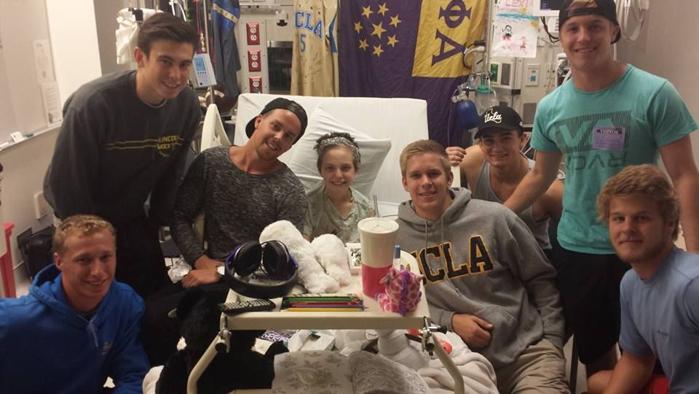
In another high-profile case, one chapter of one fraternity at one campus decided to do something so heartwarming, that it was picked up by many media outlets and went instantly viral.  The brothers of Sigma Alpha Epsilon at UCLA have taken to supporting a young cancer patient whose hospital room looks out upon their house.  They surprised her by spelling her name in their Christmas lights as well.  Read more of the story and try not to be in a good mood the rest of the day.

Both of these situations can live and operate in the same space, and actually, they complement each other quite well.

However, as the NIC story emerged, I appreciate that the SAE story also came about and re-centered us on what will be truly effective in our efforts to enhance the image of fraternity and sorority life: our actions.

Negative press has always been a problem in Greek life, and it unfortunately tends to always be a scapegoat.  If only the media didn’t portray all of those negative stereotypes!  It’s increased tenfold in recent years because of how one negative story can now spread like wildfire throughout social media.

One of the earliest lessons of fraternity life I learned and still carry with me is that when you focus too much blame on media representations of fraternity, you are giving the media the power to define you.  I was told as a young fraternity member to take the power back and focus on changing behaviors and living the values of my fraternity.  And I’ve been trying to do that ever since.

 
And so, here are some young men at UCLA who had no reason to befriend this cancer-stricken girl other than (1) their values told them to, and (2) they have compassion in their hearts. 

The girl’s parents, nurses, doctors, and everyone who was touched by this story now have a viewpoint on fraternity that they likely never had before.  And it’s a viewpoint that could not have been reached through some sophisticated PR campaign.  For these individuals, the next negative press account of a fraternity behaving badly will be seen as an outlier, and not the norm.  It’s the opposite for the general public. Why the difference?  Because these individuals engaged with fraternity men living their values.

We don’t live out our values for the sake of good public relations.  However, it’s a fact that fraternity men living their values is still the best public relations strategy we can ever employ.

I don’t think we will ever convince the public at-large of the value of fraternity and sorority life.  The odds have become stacked too highly against us, and any proactive communications strategy we do (no matter how sophisticated or how well-funded) will always be undone by one story of one idiot fraternity member doing something that matches the stereotype of frat. 

Our movement, however, will not be undone by that one idiot.  It won’t be undone by the public at-large’s perception of us. 

If our movement is to be undone, it’s because we lost the grassroots support of influencers
touched by our members doing acts – large and small – that reflect their personal and organizational values.

In other words, if I had a choice of swaying 1,000 members of the general public to appreciate fraternity life, or one parent of a high school student instead, I’d take the parent.  We can’t get everyone on our side, but we can get the right people to be there.

We know we are noble organizations that get hijacked by fools who want to use us as vehicles for personal gain and self-indulgence.  We know the power of the values we instill in
our members.  We know the difference we want to make in our members’ lives and the communities around us.  So how do we convey that? 
 
One person at a time.  One interaction at a time.  One values-based act at a time.  While this is simpler than some broad PR campaign, it’s not easier.  But it will be way more effective.  A broad PR campaign can be there to lightly assist this personal outreach.  Most of the time, these types of campaigns only serve to build greater pride in membership of those already affiliated – which isn’t a bad outcome.

Do you want to make a difference for the future success of fraternity and sorority life?  Stop 
worrying about getting good press or building your brand.  Do this:

In honor of the efforts of these young men at UCLA and the young lady they support, let’s start something called Project Lexi.  Every fraternity that reads this blog should find a child battling an illness and adopt him/her and their family.  Simply make their lives better and easier, perhaps right now during the holidays.  Show them what it means to be a member of your fraternity or sorority.  Wear your values loudly and proudly. 

Do this because your fraternity calls upon you to live this way; to step forward instead of standing still.  Don’t worry about the P.R.  If we act in accordance with our values, that will take care of itself.

And along the way, we will do what we were always born to do: make the world a better place.

It's Time to Leave Washington DC

There is a great analogy used to describe the differences between the logical/rational part of our brain and the emotional part. The emotional side is like a large elephant and the rational side is a man riding that elephant. On occasion, the man can steer the elephant where he wants it to go. But, should that elephant get riled up and start charging, there is nothing the man can do to stop it.

And that is the primary reason why the fraternity groups pushing to pass the Safe Campus Act should withdraw, lick their wounds, and find a new initiative. The elephant is running wild.

There are some logical reasons why the Safe Campus Act makes sense (or at least portions of it). Rape is second only to murder in terms of egregious crimes (think of how often you hear “murderers and rapists” used as a blanket term for the worst of our society). And so, to think that such a crime committed on a college campus might not have to involve the police or legal representation is strange at a minimum.

Now – if reading that paragraph made your blood boil, then notice the elephant running wild in your mind. You probably thought to yourself, “why would he give a flip about the accused, what about the victims?! Why protect the rapists?!”

Being concerned for those falsely accused of a crime that egregious, having empathy for victims of rape, and having hatred for those who actually commit the heinous act are ideas that can all live in the same space.

There are great arguments on the other side of this issue as well (found amidst the moral self-righteousness that has become a bit suffocating). It’s a contentious issue with strong points on either side and we should be careful to not assign evil motives to those holding a position different than ours.

Oh wait, it’s 2015. We do that all the time now.

The fact of the matter is, the emotion in this debate has won and supporters of the Safe Campus Act have lost the ground to make their case. It’s time to make it go away.

Let’s think about our whole presence in Washington.

We don’t need to be in Washington DC to influence or advocate for an issue. It’s not the only place where change happens (in fact, it may be the place change goes to die). I believe that the allure of the congressional offices, the swanky receptions and dinners, and the ability to feel like the levers of government were moving by our gentle hands seduced us into a bad and dysfunctional relationship.

We’ve spent over a decade lobbying with no significant legislation enacted to improve the state of the fraternity/sorority industry. Millions have been raised for the Fraternity and Sorority Political Action Committee (unfortunately dubbed the Frat Pac).  Millions that could have been raised instead for efforts to grow the fraternity industry or provide education to our members.

This controversy over the Safe Campus Act is a gift. It’s a way for the industry to say that it’s time to regroup on these legislative initiatives.

In fact, it’s time to go on hiatus and leave Washington DC altogether.

There is an argument that a presence in Washington is always needed because our single-gender status and right to freely associate is always in jeopardy. It’s hard to believe that if those core issues were ever truly in serious danger we couldn’t ramp up an effort to advocate and fight for our rights quickly.

Just ask yourself how many attorneys are on your national board right now. Multiply that by a factor of one-thousand. We’ll be okay.

Leaders in the NIC and NPC: you shouldn’t be blamed or called nefarious for trying to be a champion of Greek life and our members in the halls of government. Don’t be too proud, however, to close this current saga for now. Whether these newest efforts are just or not, the emotional charge is too great to overcome. Soon the damage to our reputation might be as well.

If this is an issue we really have passion for, let’s take it back to the grassroots and have them help us figure out a way forward.

Let’s start doing again what we do best, which is not shaking hands with and embracing congressional staffers, but rather, shaking hands with and embracing our own members.


Fraternity Bacon...or...What Causes Cancer in Greek Life?

Thanks World Health Organization for taking the fun out of bacon.  Now, every time I bite into my BLT, I’m going to hear the sounds of tumors forming instantly inside my body. 

Bacon can cause cancer, according to the WHO.  And they’ve added it to their long list of carcinogens – a list meant to make us paranoid about doing anything other than sitting in a padded bunker eating pieces of lettuce.

But hey – good news!  Fraternity is not on the list!  Yet.

While this is a no-fun list by the WHO, it is actually quite helpful.  The list isn’t saying that these things will always cause cancer, but could.  Pickled vegetables, leather dust, and coffee are also on the list.  So, if you’re trying to preserve your body for a long life, the list is a helpful guide of things to avoid or take in moderation.

Although when it comes to leather dust, go big or go home I say.

Greek life needs a list like this.  Maybe this could be the next project of AFA or AFLV or NIC 2.0:  create an annual listing of things that cause cancer in the fraternity movement.  It could be a list that is added to or subtracted from based on new data that’s acquired.

This list would be a guide for fraternities and sororities that want a sustainable future, as well as a guide for professionals who work with Greek life to detect warning signs of impending doom

Now – you and I could probably create this list based on conventional wisdom about what ails the fraternity/sorority movement.  Such a list might look like this:

Fraternity/Sorority Carcinogens
1. Hazing
2. Passive recruitment
3. Parties with alcohol
4. Theme parties that degrade women or minorities
5. Chapter houses

But instead of guessing or relying on conventional wisdom, it’s time for some individual or organization to lead a meaningful research effort into what inspires fraternity excellence or diminishes it. 

Something only ends up on the WHO list if science has proven it deserves to be there.  It’s time we got scientific about the fundamental causes of poor health in Greek life.

PhD and Masters students – here is a chance for you to do essential research that can make a real difference .  Here are three research questions, that together or separate, could help make a data-driven list of behaviors that jeopardize fraternity/sorority sustainability and that could inform our future practices:

  1. What are the most common detectable predictors (warning signs) for a fraternity/sorority that will have its charter revoked within the next 12-24 months?  (study chapters that had their charter revoked and look for themes that were present 1-2 years earlier)
  2. What are the common denominators for all fraternity/sorority chapters that have been suspended or closed due to a tragic event in the past ten years? (perhaps compare those with the habits in common of chapters that have won their national fraternity’s top award in the last ten years)
  3. What are the common themes in the experience of fraternity/sorority chapters that are closed or reorganized within five years of being chartered?
The research from these three studies could provide the data needed to finally understand what causes a Greek organizations to fade, decline, or disintegrate altogether.  Armed with this knowledge, we can see warning signs before they become horrid front-page stories.  And, we can make smarter choices within the fraternity experience. 

Maybe we'll still eat bacon every once in a while - but we'll understand it can't be the biggest part of our diet.

With over 200 years of history, the fraternal movement ought to know what it's greatest carcinogens are.  We ought to have definitive answers on the things that give our organizations "cancer."  It doesn't mean we'll always listen - but not knowing can no longer be an excuse.


Fraternity Needs Even More Tradition

Tulane Sig Ep's after serenading the university president
I love tradition.  I love the spark it can provide an organization.  In my Kiwanis Club, we have lots of traditions, and I’d be upset to see them go.  We sing at the start of every meeting – terribly – but we sing.  It feels good.  I don’t want my Kiwanis meeting to feel like a business meeting at the office.  I want something that touches my emotions and lifts my heart. 

Fraternities and sororities certainly are guilty of being tradition-bound organizations.  Tradition imprints almost all aspects of our identity, from the Greek names and letters we wear to the creeds we state loudly and proudly.

But there is a compelling reason for us to embrace our nature as tradition-bound organizations.  The origin of the word tradition is from the Latin traditio, which refers to something being transmitted, carried forth, and passed from one person to the next for safekeeping.  Organizations that have a great deal of tradition tend to last, because they inherently care about the safe passage of their organization from one generation to the next.

On occasion, there are calls for fraternities and sororities to change or get rid of some of their traditions.  This isn’t unusual for any institution, and neither is the typical negative response and reaction.  Churches come to mind as another organization that deals constantly with the push and shove of keeping or discarding traditions.

Why do we bristle so much when we our traditions are challenged?  It’s because we believe that losing them would mean losing a part of our identity.  And in some cases, it would.

The origins of the word tradition and standard definitions for it may not be enough for us to work with.  I believe in a five-point test to determine if something is indeed a tradition worth celebrating and keeping:
  1. Does it offer unique value to our organization and our members?
  2. Is it a longstanding practice that bridges the past with the present?
  3. Does it raise spirits and breathe life into our organization?
  4. Does it honor our organization, its members, and our legacy?
  5. Is it current with societal views on human relationships?
Thus, it is not the new theme party you started last year that you now believe you can’t live without.

It’s not a practice that includes hazing, harmful and destructive behavior, for that saps life from your organization and doesn’t honor your legacy.  Sorry – your alcohol-fueled big brother hunts or your pledge hell week is not a tradition. 

It can include the fact that your fraternity sings or chants (I love fraternities that sing), but not songs that disparage others or would be considered racist or homophobic.   

It can include awards you give each other, even some that are intentionally humorous or sarcastic.  Humor can certainly breathe life into your organization.  But there are ways to be humorous and honorable at the same time.

Sometimes a tradition to someone else can seem puny and dumb, but even those should not be casually dismissed.  My fraternity held a Senior Wills event each year, in which graduating seniors could pass down wisdom or items to younger members.  I saw men brought to tears over receiving an ugly, tattered, sweat-stained hat from an older member – because it was a piece of them. Other traditions can have no other purpose except to be fun or just produce fond memories.  Fine with me – as long as they can meet the test above.

Here is an exercise for you.  Besides Ritual – which is absolutely your most cherished tradition – what other traditions are sacred to your fraternity or sorority?  Use the test above as an evaluation tool.  Are there any that fall away?
 

Even our traditions that seem old-fashioned can be given new and remarkable life.  Consider lavaliering or pinning, which has been challenged as being hetero-centric and old-fashioned.  Forget the fact that it can be beautiful and symbolic.  Consider this story from Denison University in Ohio about a pinning ceremony that spoke volumes about the women involved and all those surrounding them.


As long as traditions meet the standards above, there’s plenty of room for more.  Let’s continue to find ways to take the best of what we are and who we are, and share that with others.  After all, that’s our finest tradition.


Brother Blago

It's been almost a decade, but perhaps you remember the story of former Illinois Governor, Rod Blagojevich, aka Blago. He was a promising politician until he was impeached, removed from office, and thrown in prison for bribery. And that's where he still remains today.

The first thought that occurred to me when I learned of this scandal right after it happened was “uh oh – he’s a Theta Chi!” I might not have known that except for his picture being included in a slideshow of famous Theta Chi’s, shown at our convention the prior summer. I hope and expect that the slideshow is Blago-free these days.

The Blagojevich episode and others like it calls into question a standard practice of marketing fraternity: using the famous and powerful to showcase our significance. We’ve all seen or heard the statistics (which vary wildly depending on who is sharing them) and they’ve continued to be a staple of our proof that we are effective. We claim a high percentage of Presidents, Senators, Governors, and others as an indication of our strength in developing leaders. Nobody has ever proven that this is even an effective practice. Did you join because Calvin Coolidge was Greek?

Maybe it used to work – but I doubt it would anymore. Especially since the approval ratings of politicians tend to be in the gutter (congressional disapproval currently stands at 75%). Are people able to turn off their filter of distrust and distaste for politicians when we use them as a marketing tool? Probably not. If we proudly told someone yesterday that a person like Blagojevich rose to his position because of the teachings of fraternity, what do we tell that person today?

Because humans are fallible, we can’t completely escape incidents like this. In most cases, we should be proud of famous folks that wear our letters. And some are going to screw up. However, the propensity of this happening with politicians (and possibly Hollywood celebrities) seems to be greater. So why are they the ones we tend to showcase most often?  

I’m reminded of hearing Wolf Blitzer, the CNN Host and a fraternity man, speak at an NIC event. We were all excited to have someone of that stature speak to the fraternity movement. That excitement wore off a bit when Wolf began sharing stories of hazing and how that helped him later in his work as a journalist. Thanks Wolf!

I would be excited to see a national Fraternity or Sorority take the lead and begin promoting the influence of Greek membership on other segments of society – the ones (in my opinion) that really
matter and really prove that we make a difference. What percentage of social service providers are affiliated? What about leaders of nonprofit organizations? How many doctors, nurses, and teachers belong to a fraternity or sorority? How about military leaders? Community organizers? Rescue workers? Entrepreneurs? These percentages would send a powerful message about the things we value and the contribution of fraternity. We can then include politicians and celebrities, and know that we are sharing the whole picture.

By the way, I’m assuming with some confidence that the percentages in those other fields would be high. Maybe not. That could lead to a whole new set of conversations.

Even greater questions remain for us. How do we explain the fraternity/sorority experience of those politicians who end up being corrupt? Did their fraternity/sorority make matters worse? We all know plenty of chapters where this would be possible. If we want to claim leaders in society as our own, we better keep doing the values-based work on the ground that ensures we can be proud of those we claim.  

Perhaps it also requires that we publicly denounce those that embarrass our organizations.  

For every Rod Blagojevich, there is a fraternity man who lives the principles of his organization each day and makes all of us proud. In fact, there are thousands of them. Despite my misgivings about Brother Blago, I trust that they will win the day.